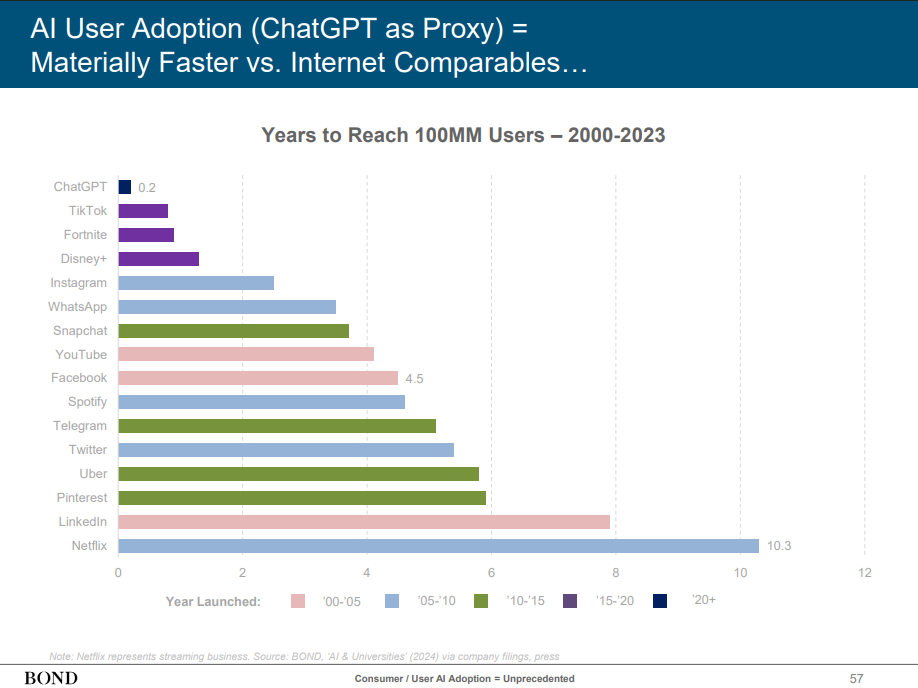
We’ve all got that friend. You know, the one who confidently dismisses AI after trying ChatGPT for exactly three minutes. “It just makes stuff up.” “Doesn’t understand what I mean.” Yet, ironically, ChatGPT just became the fastest-growing tech product in history — reaching 800 million weekly active users in just 17 months, according to the latest BOND Trends 2025 report.
Think about that: faster growth than Google, Facebook, or even smartphones.
With that explosive adoption, you’d expect businesses everywhere to be thriving, riding this AI wave toward productivity and profit. But instead, many find themselves stuck. Their shiny new AI initiatives quietly sputter out, fading into obscurity alongside other once-promising tech projects.
So, what’s really going on here?
The AI Readiness Mirage

Here’s the uncomfortable truth: most companies confuse enthusiasm and pilot successes with being genuinely “AI-ready.” But let’s put this in perspective — buying a fancy car won’t magically teach you to drive. Similarly, installing ChatGPT or an AI assistant won’t miraculously fix underlying organizational issues.
Too often, businesses dive headfirst into AI projects with enthusiasm but without a plan. They showcase impressive demos, generate internal excitement, and maybe even wow investors — but then reality sets in. Data becomes messy. Workflows resist automation. Suddenly, AI becomes just another complicated piece of software instead of the transformative tool everyone hoped for.
Numbers Don’t Lie — But They Can Mislead
The BOND report offers sobering insights beneath the spectacular growth headlines. OpenAI alone expects to spend roughly $5 billion on compute while generating about $3.7 billion in revenue — a snapshot of generative AI economics. Roughly half of S&P 500 companies now mention AI during quarterly earnings calls
Why this disparity? Because organizations underestimate what’s truly required to harness AI effectively. It’s not about having the fanciest tech or hiring the smartest engineers. It’s about building a structure solid enough to support AI’s potential.
The Real Building Blocks of AI Success
Here’s the core secret: AI isn’t magic — it amplifies what already exists. Good becomes great; messy becomes chaos. Real AI readiness means getting your internal house in order first.
Start with your information: Is your data structured and searchable, or does finding a critical document feel like an archaeological dig? Without “information hygiene,” AI has nothing reliable to work with.
Next, look at your processes: Are tasks clearly defined and repeatable? If every employee does things their own way, AI can’t reliably automate anything — it gets confused, inconsistent, and eventually ignored.
Then, consider your technical landscape: Is your infrastructure modular, documented, and designed for integration? Dropping a sophisticated AI into legacy software or tangled systems is like trying to run a Ferrari on a dirt road — slow, painful, and expensive.
Finally, organizational alignment matters profoundly. Do your teams agree on what AI should accomplish? Without clarity of purpose and unified goals, AI initiatives devolve into side projects, losing support as quickly as they gained it.
Warning Signs You Can’t Afford to Ignore
If your AI pilots produce wildly inconsistent results, if no one trusts the AI-generated content, or if your data feels perpetually “under construction,” those aren’t small glitches — they’re major red flags.
Similarly, if your AI project relies on a single enthusiastic person or if excitement overshadows clearly defined success metrics, you have fundamental readiness problems. These symptoms indicate deeper, structural gaps that must be addressed before AI can deliver real value.
From AI Hype to Sustainable Impact

Here’s the bottom line: embracing AI without readiness is like building a skyscraper on sand. To shift from superficial adoption to strategic implementation, you must first acknowledge and tackle your readiness gaps.
Instead of asking, “What amazing things can AI do for us?”, shift your focus to: “What conditions do we need to create so AI can thrive?”
The companies that get this right won’t just adopt AI — they’ll leverage it as a genuine competitive advantage. They’ll become the leaders others envy, confidently using AI not because it’s trending, but because they built a foundation for it to succeed.
Subscribe to the Entinco blog.
Related posts:
The 5 Stages of AI Adoption: From Manual Labor to Lights-Off Operations
What Is an AI Agency? A Clear Definition for Tech Leaders
The 5 Levels of AI Automation: A Clear Framework for Tech & Business Leaders