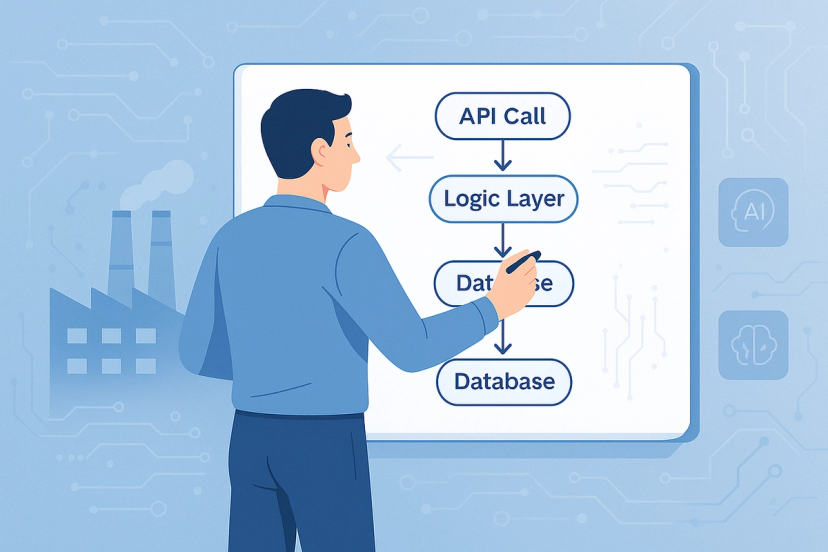
A few years ago, I worked with a company that was genuinely excited about AI. Every department raced to experiment with new tools. Within six months, they had dozens of isolated successes — but no real transformation. Leadership grew frustrated. Despite the investment of time and energy, there was no integrated system, no scalable workflows, and no measurable business impact. Everything was still manual, just sprinkled with disconnected experiments.
That experience made something clear: without a structured roadmap, AI adoption remains chaotic and shallow.
Why a Roadmap Matters
When organizations think about AI, two points are clear: the starting point — no AI at all — and the final goal — a fully autonomous, lights-off operation. But how to get from one to the other remains murky for most teams. Companies get stuck improvising, losing time and wasting resources.
This roadmap provides a structured path through those middle stages — defining practical directions for moving from early AI use to full AI-driven operations. (If you haven’t yet read about what an AI Agency is, I recommend starting with the AI Agency Definition post).
Here’s how the journey unfolds.
Stage 0: Manual Operations
Organizations at Stage 0 operate entirely manually. Every workflow depends on human skills, decision-making, and labor. This stage offers complete human control and maximum flexibility, but also reveals major limitations: high costs, inconsistency, and scaling problems as complexity grows. Productivity is tied tightly to individual effort, and repetitive tasks drain valuable time and attention.

Rather than rushing to automate, the first necessary shift is cultural. Organizations need to:
- Open Up to the Idea of AI: Introduce AI as an opportunity to assist, not replace, human work.
- Allow People to Experiment with AI Tools: Encourage teams to try available AI tools informally, learning through curiosity and small wins.
Stage 1: Initial Adoption
At Stage 1, grassroots experimentation with AI begins. Employees independently explore tools like chatbots, transcription apps, or text generators. Some discover quick productivity boosts — faster report writing, improved content generation, faster documentation — building early momentum around AI’s potential.
However, this phase also brings new chaos. Without coordination, teams duplicate efforts, overspend on licenses, and create fragmented, unscalable systems. Learning stays siloed, and organizational benefits are uneven.

To channel this emerging energy into sustainable progress, the next steps are:
- Centralize AI Tool Selection: Rationalize tool purchases and manage them strategically.
- Train Staff in AI Fundamentals: Teach prompt engineering, use-case framing, and ethical guidelines.
- Encourage Structured Experimentation: Create reporting systems to capture useful findings.
- Identify Repeatable Wins: Find patterns among isolated successes that can inform broader strategy.
Stage 2: Generic Assistance
As organizations coordinate efforts, they reach Stage 2. AI tools become integrated into official workflows. Employees follow standardized templates, apply best practices, and receive structured training. Productivity improves as workers begin consistently using AI to augment routine tasks like document drafting, data entry, and customer communications.
Yet challenges persist. Despite improved consistency, the tools remain generic — requiring extensive human prompting and adaptation to produce good results. AI outputs vary depending on how well employees craft their inputs, limiting overall efficiency.

The organization’s next mission is to move beyond generic tools by:
- Refining and Expanding SOPs and Templates: Create plug-and-play processes for AI-augmented work.
- Delivering Role-Specific AI Training: Customize AI usage education based on business function.
- Expanding Simple Automations: Identify and fully automate highly repetitive, low-risk tasks.
- Preparing for Customization: Recognize gaps where off-the-shelf AI cannot meet operational needs.
Stage 3: Tailored Knowledge
When companies invest in aligning AI systems with their internal knowledge, Stage 3 begins. Models are fine-tuned with proprietary data. Retrieval-Augmented Generation (RAG) systems connect AI to dynamic company knowledge bases. Outputs become much more accurate, relevant, and useful — and the need for constant manual prompting drops sharply.
This achievement unlocks major efficiency gains but comes with a cost: customization demands serious investment in data infrastructure, ongoing knowledge updates, and AI management. AI may still struggle with complex judgment calls and evolving contexts if not maintained properly.

To build on these gains and sustain momentum, organizations should:
- Fine-Tune Models on Internal Knowledge: Train AI with proprietary workflows and data.
- Deploy RAG Systems: Enable dynamic, real-time access to evolving company knowledge.
- Develop Specialized AI Assistants: Tailor solutions for specific departments or functions.
- Establish Knowledge Maintenance Systems: Build processes for refreshing AI knowledge bases regularly.
Stage 4: Agentic Execution
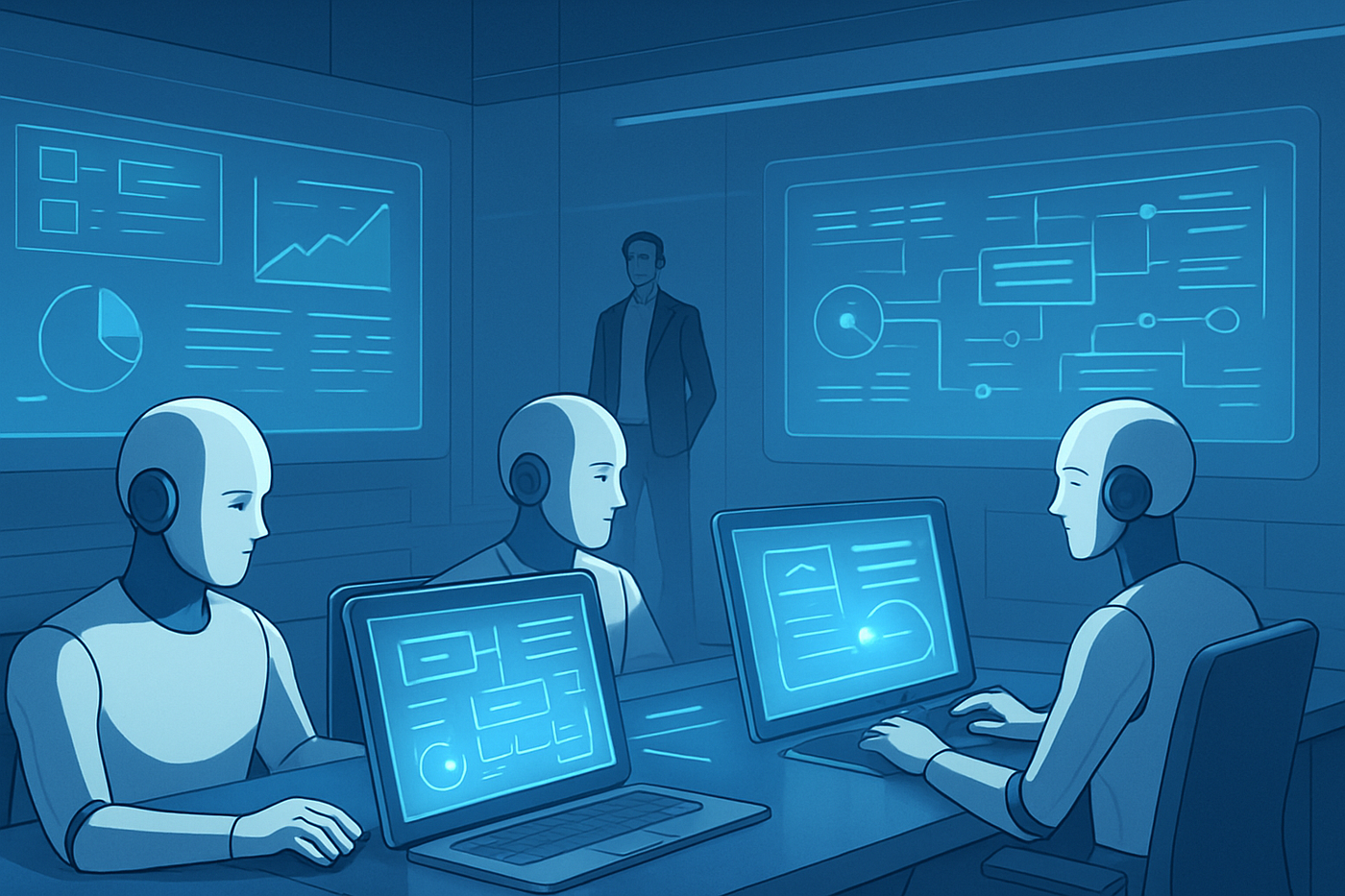
Stage 4 marks a powerful shift: AI agents move beyond simple support and begin executing workflows autonomously. Agents receive goals, plan actions, coordinate processes, and adapt strategies without step-by-step human instruction. Human teams shift into supervisory roles, focusing on strategic direction and exception management.
The payoff is immense: faster execution, scalable operations, and minimal manual bottlenecks. However, managing autonomous agents introduces complexity. Poorly coordinated systems risk operational failures, and agents must be monitored carefully to stay aligned with business objectives.
Organizations moving through this stage should focus on:
- Deploying Goal-Oriented AI Agents: Transition from task-based prompts to goal-driven execution.
- Orchestrating Multi-Agent Systems: Build networks where AI agents collaborate and escalate issues when needed.
- Implementing Autonomous QA Systems: Audit agent performance using AI-powered quality control.
- Restructuring Human Roles: Reassign people to strategic oversight, troubleshooting, and governance.
Stage 5: Lights-Off Factory
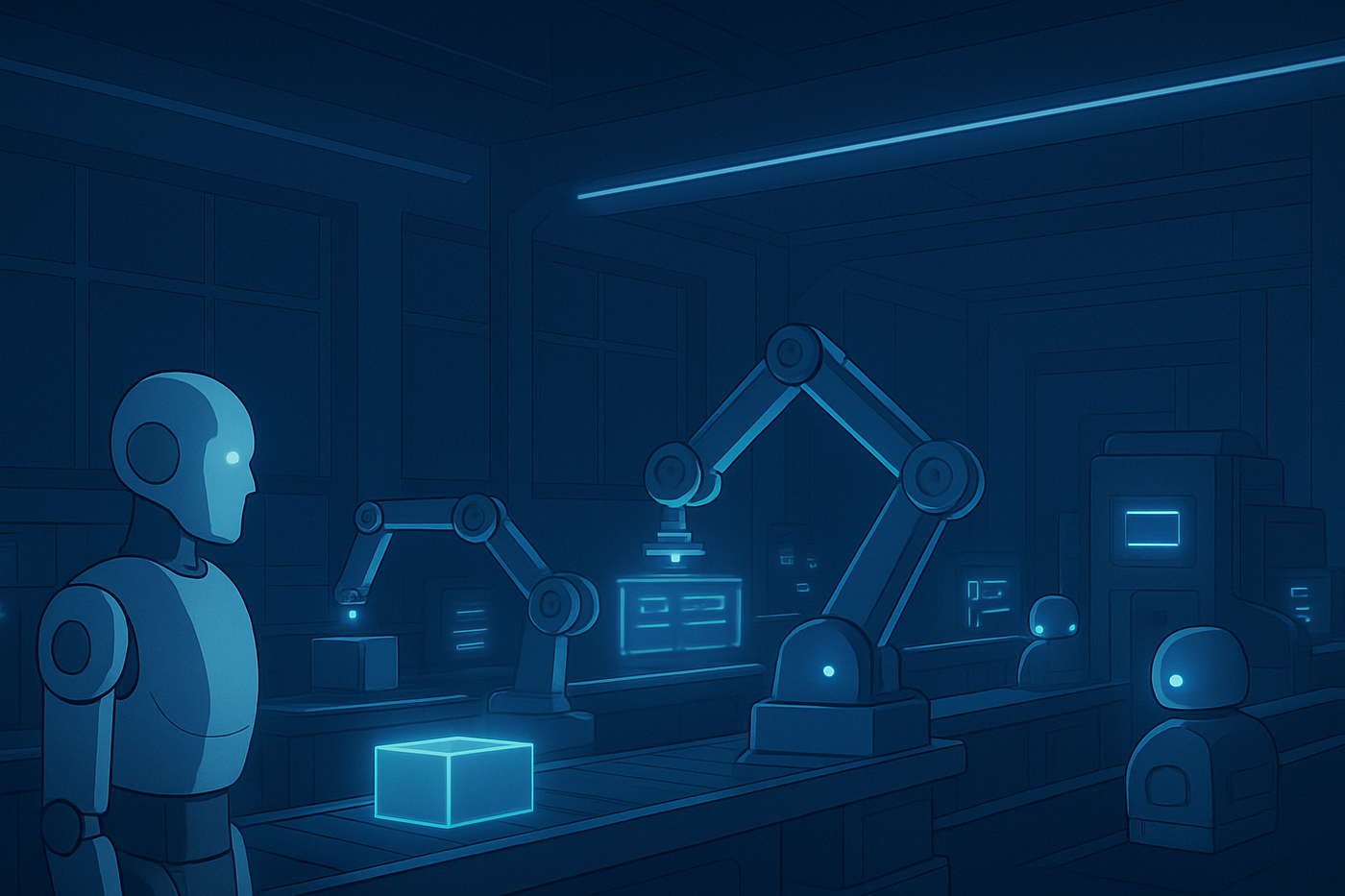
The final stage, the Lights-Off Factory, represents full operational autonomy. AI agents manage workstreams independently, adapt to new priorities, self-monitor for errors, retrain themselves as needed, and continually optimize outputs — all without daily human involvement.
This vision remains aspirational for most companies today. Technologies for fully self-correcting, continuously learning agent ecosystems are still emerging. Moreover, ethical, compliance, and governance frameworks must mature to support such autonomy safely.
Yet for organizations that aim high, the long-term steps are clear:
- Develop Self-Healing AI Systems: Equip agents to detect and correct their own errors dynamically.
- Strengthen Governance and Oversight: Build robust structures for monitoring ethics, compliance, and goal alignment.
- Invest in Autonomous Learning Infrastructure: Create environments where AI can evolve without constant reprogramming.
- Maintain Strategic Human Leadership: Keep human teams focused on guiding the organization’s mission and adapting system goals.
Where Organizations Are Today — and What Comes Next
Most companies today are somewhere between Stage 0 and Stage 2. They are experimenting with AI tools, formalizing early workflows, and beginning to realize consistent productivity gains. Only a small number have entered Stage 3, tailoring AI to their internal needs. Very few are operating at Stage 4, with agentic execution in place — and Stage 5 remains almost entirely theoretical under current technological conditions.
However, the distance between these stages is shrinking fast. Advances in dynamic memory, autonomous orchestration, and agent collaboration suggest that fully autonomous operations will move from theoretical to practical within the next years.
Organizations that begin building systematically today — moving through each stage with intention — will be the ones best positioned to lead in the coming era of AI-first operations.
Want to see the roadmap in action?
Read our post AI Agency Roadmap in Action: How We Automated Content Creation for a step-by-step look at how we turned the framework into a fully AI-driven pipeline inside our team.