
We work backward from the business you want to build, improve the processes and knowledge you already have, and increase automation only when quality and control are proven.

AI is goal-oriented and probabilistic. It can adapt within a task, but it cannot reliably reconstruct missing context, undocumented decisions, or quality standards that exist only in people’s heads.
When processes are explicit, knowledge is structured, systems are connected, and good output is defined, AI can execute work more consistently. Without that foundation, automation scales variation and correction work.
The opportunity is larger than individual productivity. The business can change the cost, speed, and capacity of execution when AI is built into the operating model.

Each principle addresses a different failure point: unclear direction, disconnected tools, wasted custom build, lost expertise, premature autonomy, uncontrolled quality, ungoverned risk.
Applied together, they connect every AI initiative to a target state, a business priority, and a readiness decision. Leaders can see what to do now, what must be prepared first, where people retain authority, and what evidence is required before automation expands.

AI scales toward whatever target you give it. No target means scaling toward random use cases. Without a defined end state, each project optimizes locally and conflicts with the next. Resources go into pilots that do not connect. We define the target operating model first: what to automate, where people stay involved, which outcomes must improve. Every decision after that has a direction.

AI tools work on tasks. Your business runs on connected workflows, handoffs, decisions, and quality checks. Without those connections mapped, each tool solves one problem and creates a new integration gap. We map the system before selecting any technology. Automation then works across the business, not just inside one team.

Standard AI infrastructure is available to every competitor. Your processes, rules, and domain knowledge are not. Without that distinction, custom development budget goes into capabilities anyone can license. We use platforms for what is common. We build custom logic only where your business needs control or fit that platforms cannot provide, protecting what competitors cannot copy.

AI handles execution. People handle judgment: edge cases, exceptions, decisions that require context the system does not have. Without that separation, automation removes expertise the business depends on and cannot easily rebuild. We define where people stay involved and capture their knowledge as automation grows. The business retains what it knows and becomes less dependent on any individual holding it.

AI introduced too fast into a live process turns every edge case into a production failure. Without a staged approach, teams lose trust in the system before it has a chance to prove itself. We do not move clients directly from manual work to full autonomy. Automation increases only when the process is clear, edge cases are understood, quality standards are proven, and operating controls are in place.

AI scales at whatever speed you allow it. Bad outputs scale as fast as good ones. Without quality controls in place before automation expands, errors become the new standard, at scale. We define what good looks like — standards, examples, review rules, validation logic — before each stage moves forward. Quality is the gate, not the timeline.

AI embedded in daily operations creates risk that grows with every new workflow it touches. Without ownership, oversight, and rollback plans defined before scaling, governance arrives after the damage. We build controls into the operating model from the start: ownership, oversight, privacy, security, rollback, incident response, before automation reaches daily execution.
Define the AI-native target state and the business outcomes that justify the change.
Prepare the operating foundation: processes, knowledge, systems, quality criteria, ownership, and escalation.
Automate incrementally and increase autonomy only after repeated results meet the agreed standard.
The services are independent. Start with the constraint that blocks progress now, or combine them into a broader transformation.

Without a clear target state, AI initiatives fragment across teams, tools, and isolated use cases. Define how your organization should operate with AI and a prioritized path to get there.
Start with Strategy
AI cannot reliably execute processes that are unclear, inconsistent, or designed only for people. Formalize and redesign workflows for faster, more automated execution.
Redesign a Process
AI cannot work with expertise it cannot access. Structure and connect the knowledge, rules, and business context AI needs to perform work correctly.
Build the Knowledge Layer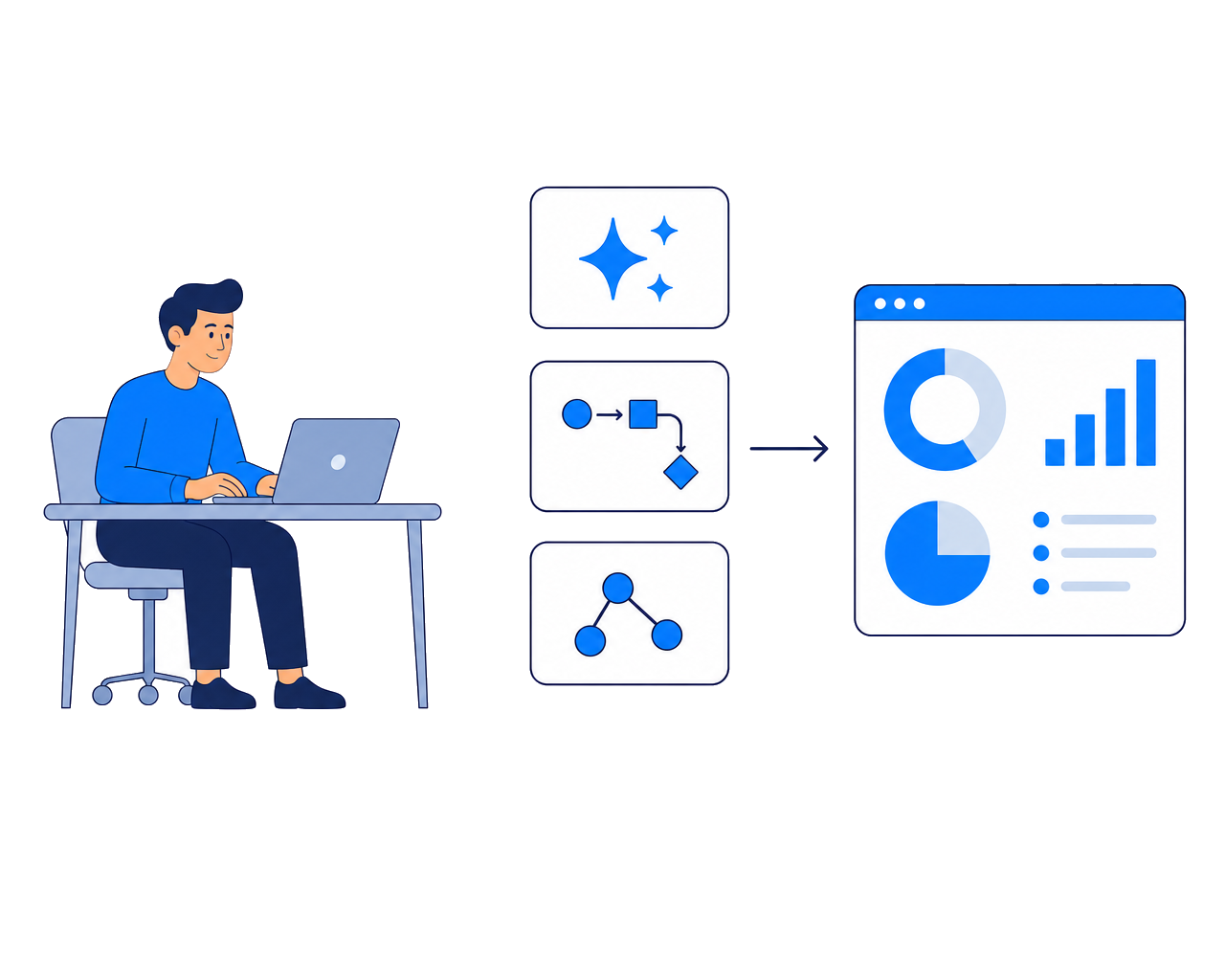
Turn recurring AI-assisted work into reusable execution. Package proven instructions, knowledge, inputs, and outputs into AI skills and producing assistants your team can use on demand.
Make Work Reusable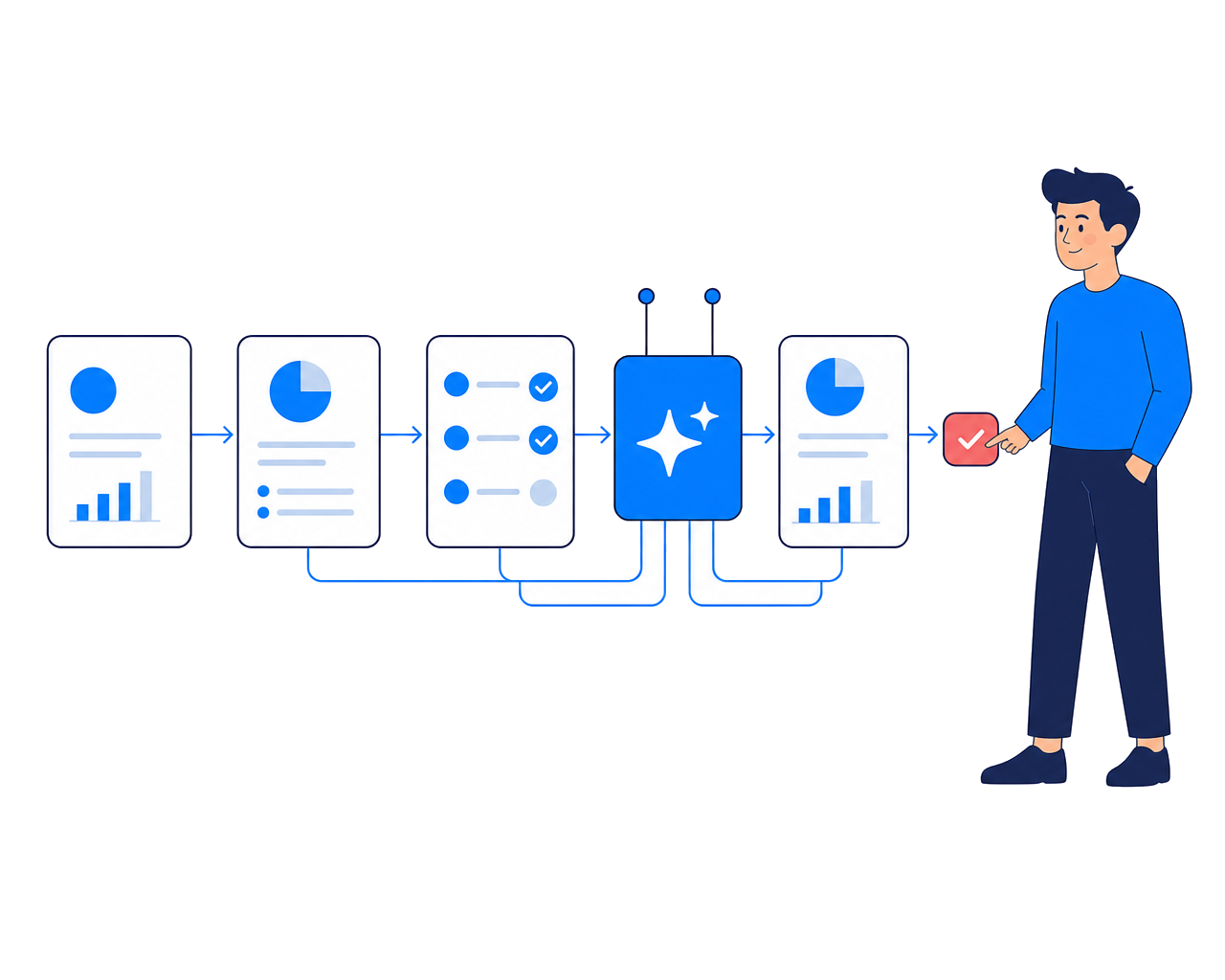
Move defined business processes from human-driven to AI-driven execution. Deploy agents that progress multi-step work, use business knowledge and systems, and involve people only where judgment, approval, or authority is required.
Automate a Process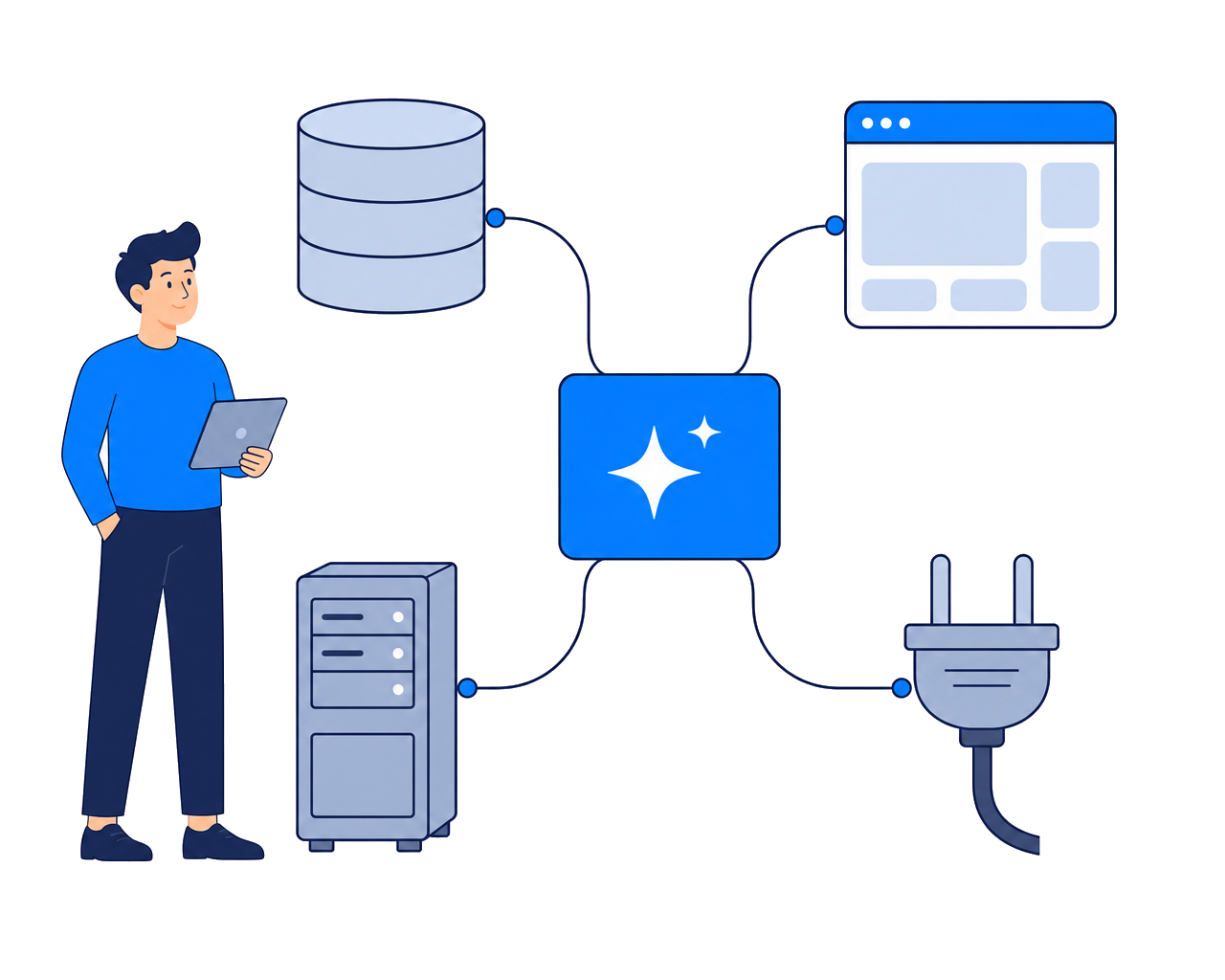
AI cannot complete work if it cannot reach the systems where the business runs. Give agents direct access to the data and actions they need across modern, legacy, and custom applications.
Connect Your Systems
Scale AI execution without scaling human supervision. Build measurable quality checks, action controls, automated correction, and exception handling directly into execution.
Add AI Controls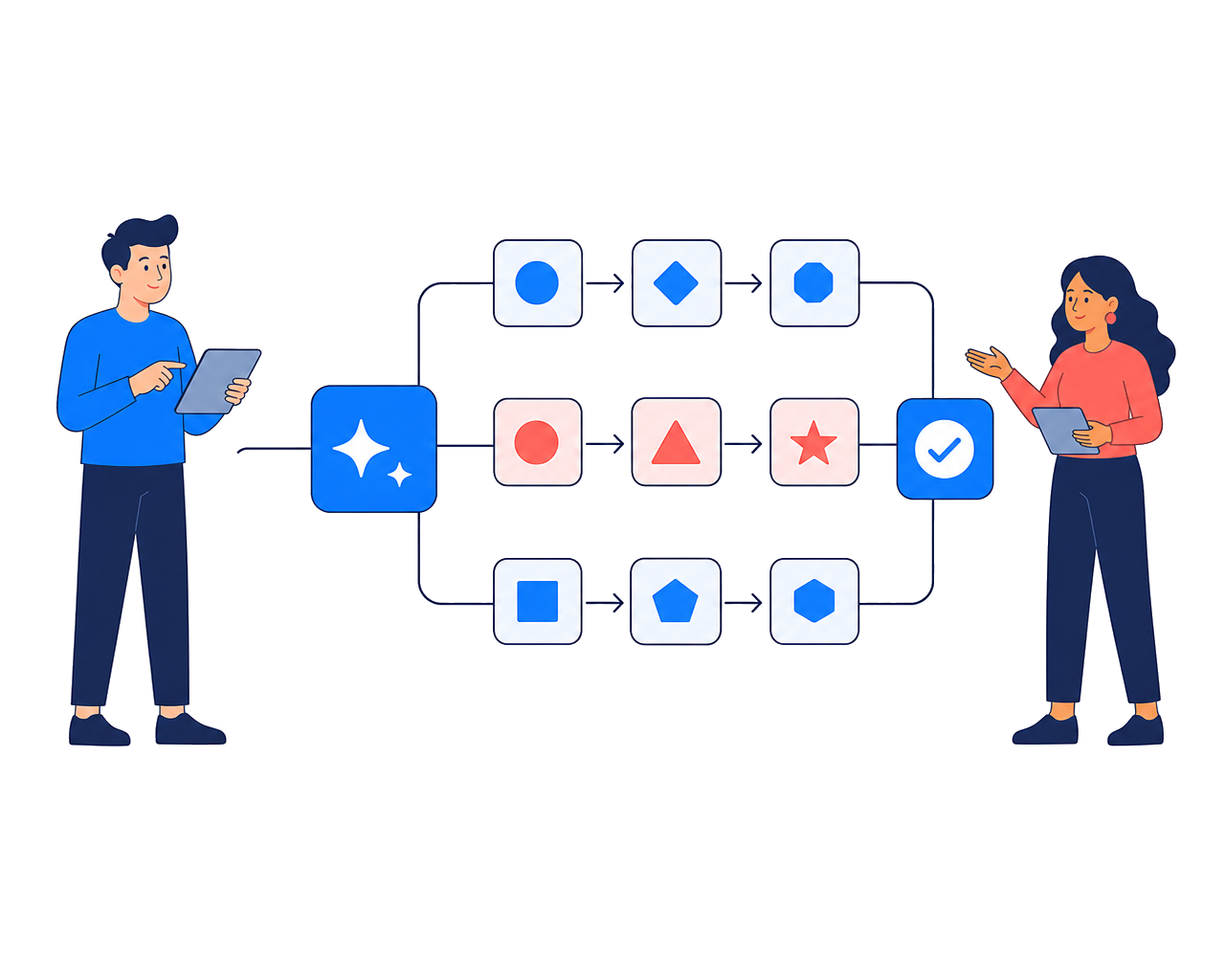
As agents, systems, workflows, and parallel work multiply, coordination becomes the next bottleneck. Build an orchestration layer that turns complex goals into coordinated, visible, and controlled execution.
Orchestrate Execution
Implement controlled AI workflows that reduce manual effort, connect systems, validate outputs, and scale from assisted execution toward higher autonomy.
Build an AI Workflow
For organizations ready to transform end to end: align strategy, processes, knowledge, execution, connectivity, validation, orchestration, and adoption under one roadmap.
Discuss Full TransformationWe will review the outcome you want, the readiness of the operation behind it, and the shortest practical next step.