
AI can now automate work that once depended on human interpretation and coordination. We help you turn that opportunity into action without disruption.

Trusted by teams at Bootbarn, NOV, Spirent, and others.





AI can reduce the cost and time of execution by multiples, not percentages, while increasing capacity and quality.
Companies that operationalize AI first can compete at a cost, speed, and scale traditional operating models cannot match.
Once AI-native competitors reset customer expectations on price and speed, catching up becomes significantly harder. The advantage will not come from access to the same models and tools. It will come from redesigning how work moves through the business so AI can execute it reliably.
Between process steps, critical context often lives in people’s heads while documents carry only fragments. When AI reaches those gaps, it starts inventing, outputs vary, and every automation needs more correction than expected.

"Where can we add AI?"
This produces isolated features and pilots that may work alone but do not improve the operating model behind them.
"How should this operation work when AI is part of execution?"
We define the target state, then work backward. We formalize the process, connect the knowledge and systems it depends on, and introduce automation in stages. AI takes on more only after the workflow and its quality controls prove reliable.
We do not rush to agents. Each stage validates the process, exposes missing context, and strengthens control before AI takes on more work.
The goal is controlled autonomy, not removing people. AI increases what the same team can deliver while professionals retain judgment and authority.
AI technology changes fast. We design around your operating model, not a vendor, so platforms and models can evolve without rebuilding the business.
We build the durable business assets that make AI reliable, then connect them to the tools that fit each stage. Technology is a component of the system, not the system itself.
A single-team use case can often be handled with a simple tool.
The hard work starts when automation crosses departments, legacy systems, decisions, knowledge sources, and quality requirements. Strategy, process design, technical architecture, implementation, and adoption must move together.
EIC provides one accountable path from the target operating model to running, supervised automation. The entry point depends on what is blocking progress today.
Without a clear target state, AI initiatives fragment across teams, tools, and isolated use cases. Define how your organization should operate with AI and a prioritized path to get there.
Start with Strategy
AI cannot reliably execute processes that are unclear, inconsistent, or designed only for people. Formalize and redesign workflows for faster, more automated execution.
Redesign a Process
AI cannot work with expertise it cannot access. Structure and connect the knowledge, rules, and business context AI needs to perform work correctly.
Build the Knowledge Layer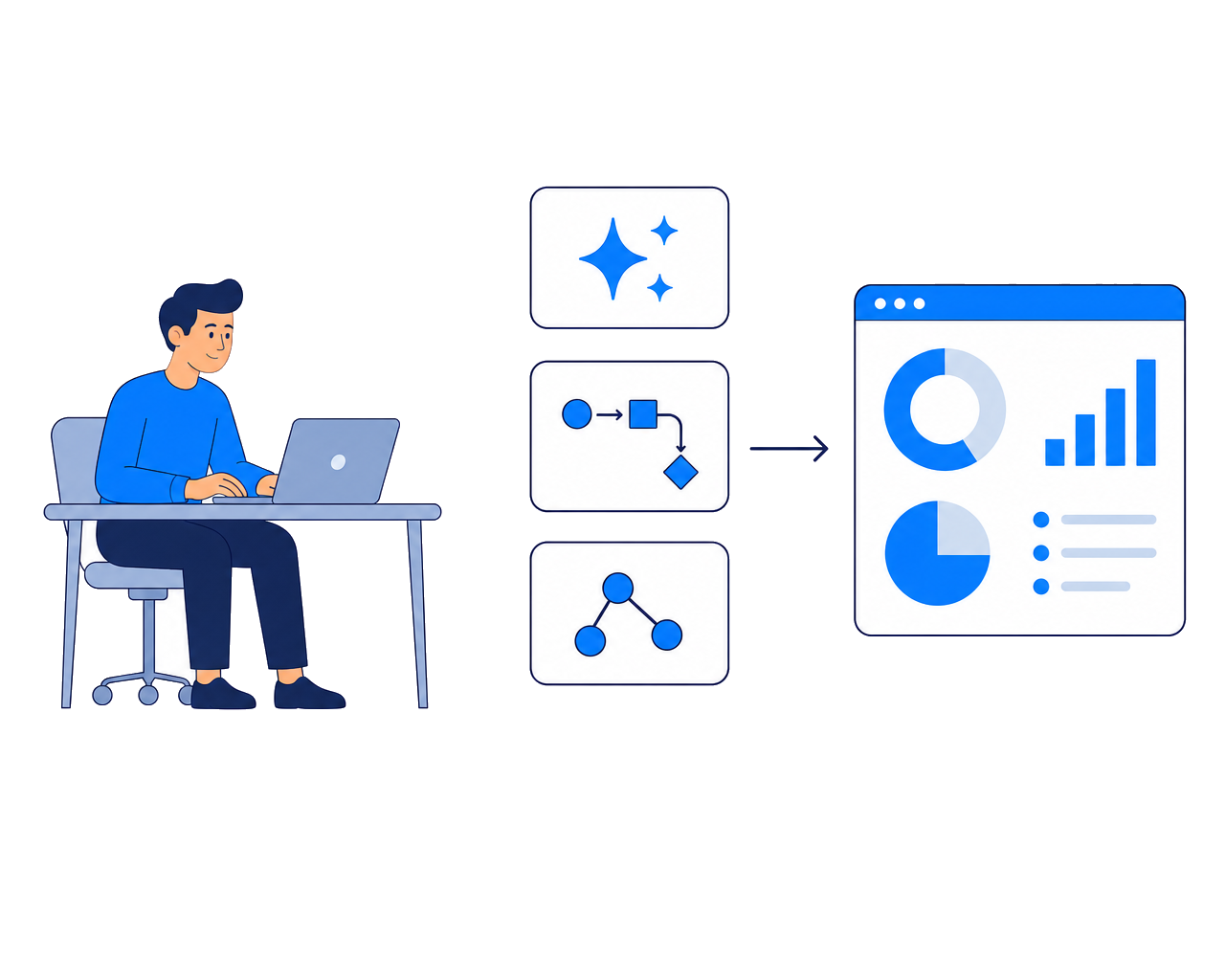
Turn recurring AI-assisted work into reusable execution. Package proven instructions, knowledge, inputs, and outputs into AI skills and producing assistants your team can use on demand.
Make Work Reusable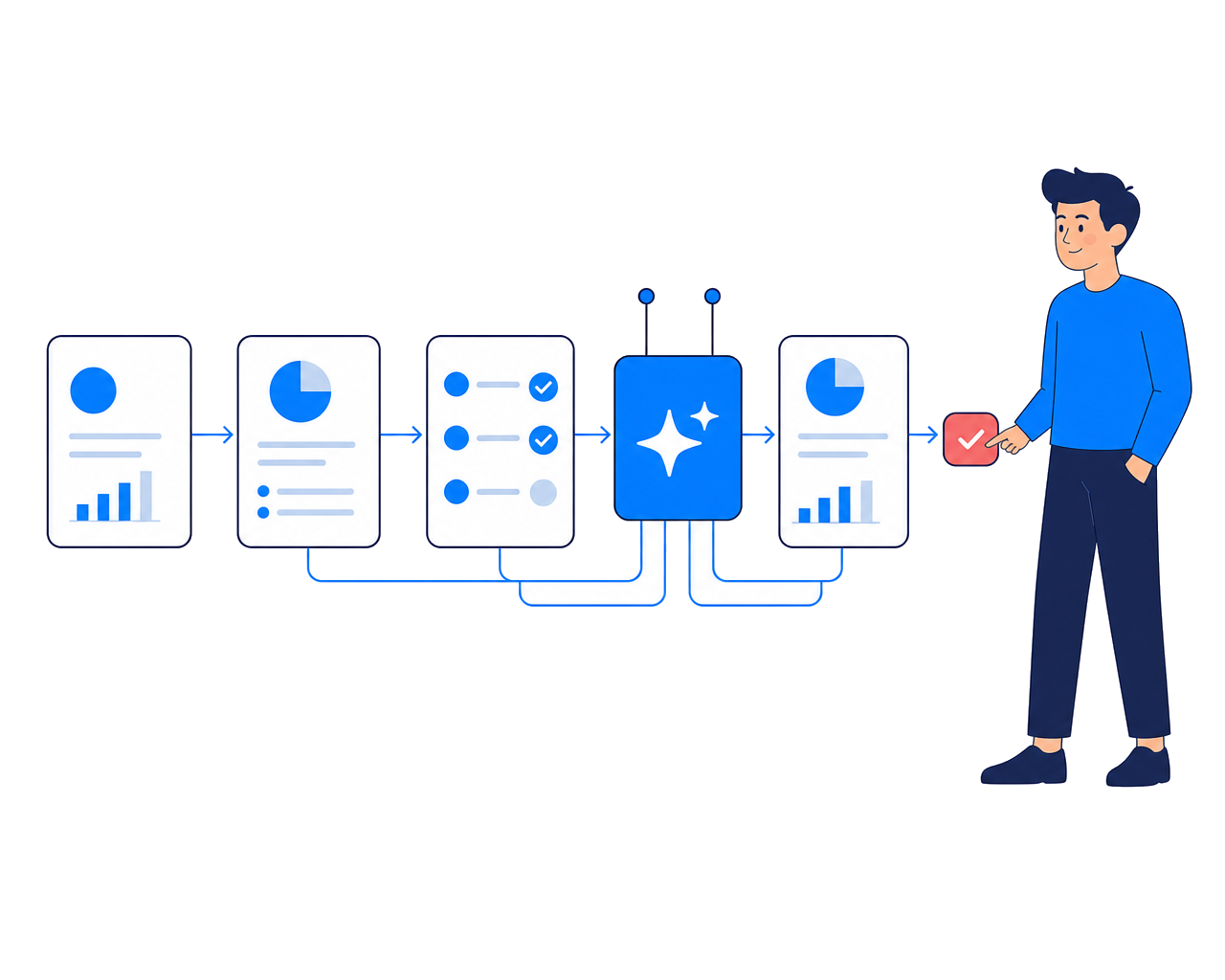
Move defined business processes from human-driven to AI-driven execution. Deploy agents that progress multi-step work, use business knowledge and systems, and involve people only where judgment, approval, or authority is required.
Automate a Process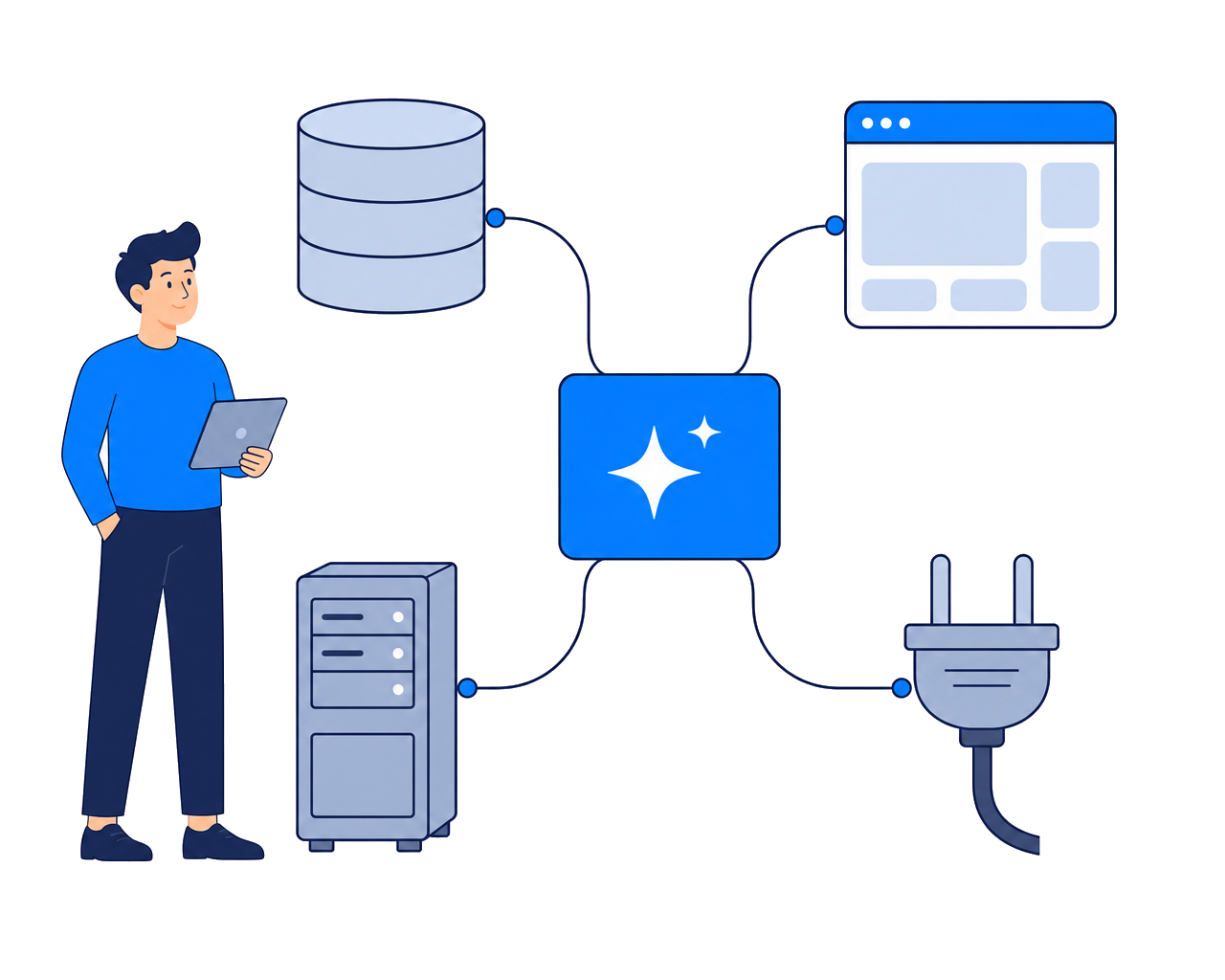
AI cannot complete work if it cannot reach the systems where the business runs. Give agents direct access to the data and actions they need across modern, legacy, and custom applications.
Connect Your Systems
Scale AI execution without scaling human supervision. Build measurable quality checks, action controls, automated correction, and exception handling directly into execution.
Add AI Controls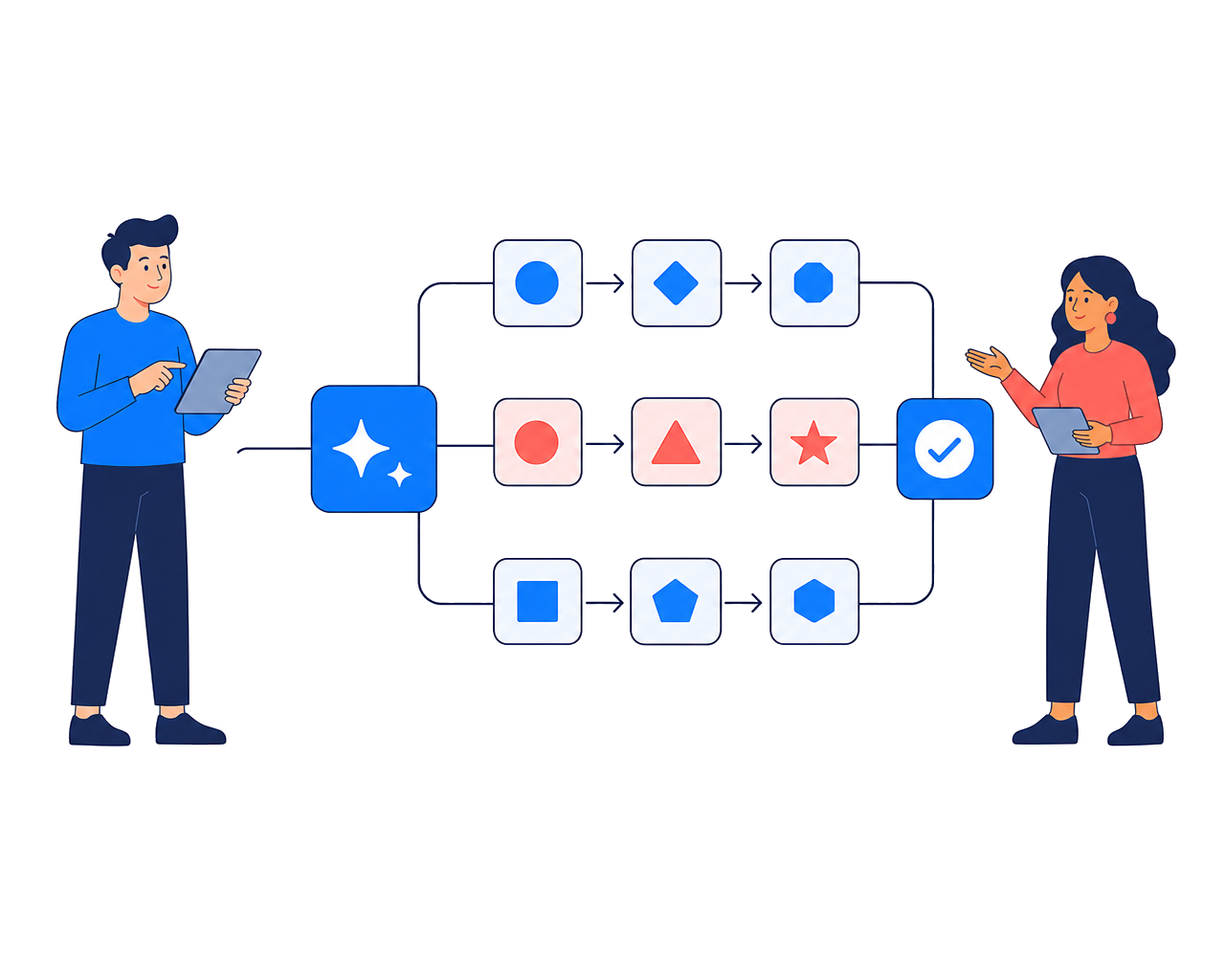
As agents, systems, workflows, and parallel work multiply, coordination becomes the next bottleneck. Build an orchestration layer that turns complex goals into coordinated, visible, and controlled execution.
Orchestrate Execution
Implement controlled AI workflows that reduce manual effort, connect systems, validate outputs, and scale from assisted execution toward higher autonomy.
Build an AI Workflow
For organizations ready to transform end to end: align strategy, processes, knowledge, execution, connectivity, validation, orchestration, and adoption under one roadmap.
Discuss Full TransformationMost providers cover one part of the problem: strategy, a platform, an integration, or an automation. The client is left to connect the rest.
EIC brings strategy, process design, knowledge engineering, implementation, and adoption together. We build around the operations and systems you already have, and we keep the technology choice flexible as the market changes.
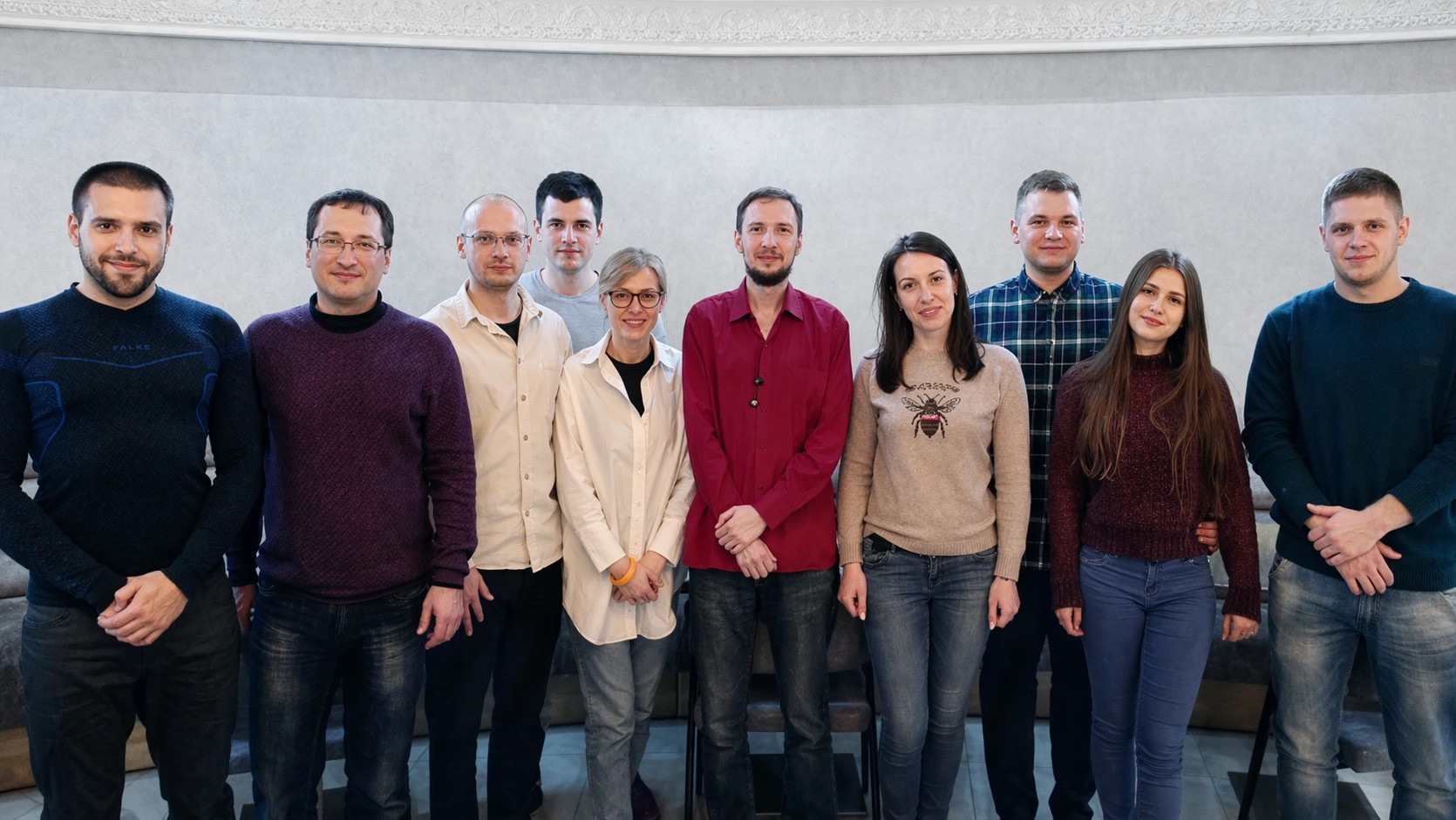
One accountable partner from strategy to adoption
Engineering-grade execution instead of trial and error
Independent of any single platform or model
Both AI engineering and business-process expertise
Work backward from a defined target state
Automation paired with verification and escalation

You get production automation built on your real processes and knowledge, the training to run and supervise it, and ongoing support as processes, systems, and AI platforms keep changing.
More execution without proportional growth in operating cost.
Shorter cycles from decision to execution and customer delivery.
Consistent execution based on your best processes, knowledge, and controls.
AI increases what every person can deliver, shifting human effort toward judgment, relationships, innovation, and growth.
Tell us how your business operates and where the pressure is. We will identify where AI could create value and what a practical path forward could look like.