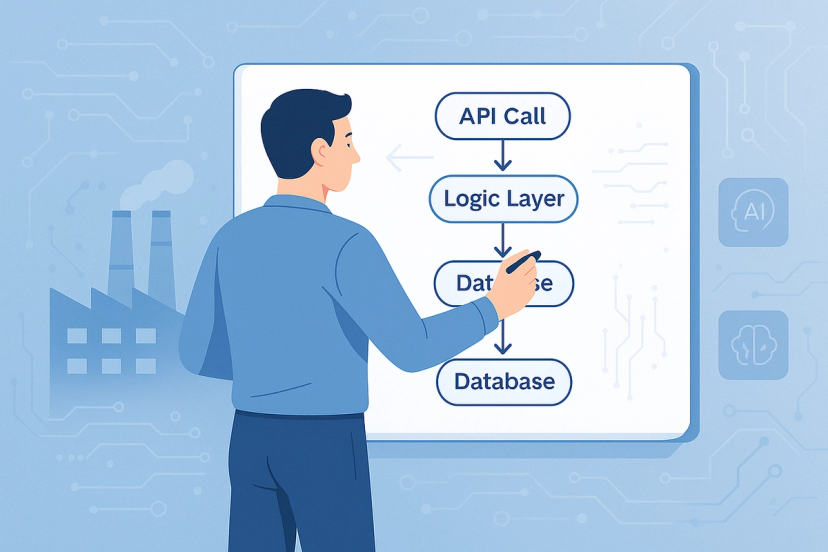
When I sat with a client recently, helping him explore integrating AI into his product, I noticed a common and costly misconception: the belief that AI must either completely solve a task on its own or is useless altogether.
This all-or-nothing view blinds many leaders to the tremendous value AI can offer even when it’s only partially automated. In reality, AI automation exists on a spectrum, and understanding this spectrum can unlock smarter, more strategic deployment.
Let’s walk through a clear framework: the Five Levels of AI Automation.
Why Thinking in Levels Matters
Recognizing automation as a layered process, not a binary, helps organizations:
- Choose the right AI tool for each task
- Reduce risk and increase adoption
- Set realistic performance expectations
- Implement scalable AI systems over time
Now, let’s dive into the five levels.
Level 0: Manual (Full Human Control)
At this level, humans perform the task entirely without AI assistance. This might seem unrelated to automation, but defining “manual” matters. Many systems allow dynamic switching between manual and automated modes — critical for quality assurance, training, or adaptation to novel situations.

Level 0: No AI involvement. Task fully human-driven.
Role of AI: None.
Role of Human: Full control and responsibility.
User Interface: Standard manual workflows.
Minimum Quality Bar: 100% (human performance).
Level 1: Assistance (AI as a Task Helper)
AI provides specific, narrow outputs under human supervision. Think predictive text, basic design suggestions, or AI-generated drafts. The human remains the primary actor, using AI to augment efficiency.

Level 1: AI performs low-level, clearly defined tasks.
Role of AI: Suggests or generates components.
Role of Human: Directs, reviews, and integrates results.
User Interface: Task-focused inputs and simple outputs.
Minimum Quality Bar: ≥ 50% usefulness per output.
You can read more about the concept of AI Quality Bar in this article.
Level 2: Approval (AI Proposes, Human Directs)
Here, AI systems propose full plans or action steps, but nothing moves forward without human validation. Importantly, the human may not only approve or reject the proposal but also provide additional directions to refine or adjust the AI’s next move. The user interface must enable entering corrections, adjustments, or instructions — making collaboration natural and efficient.
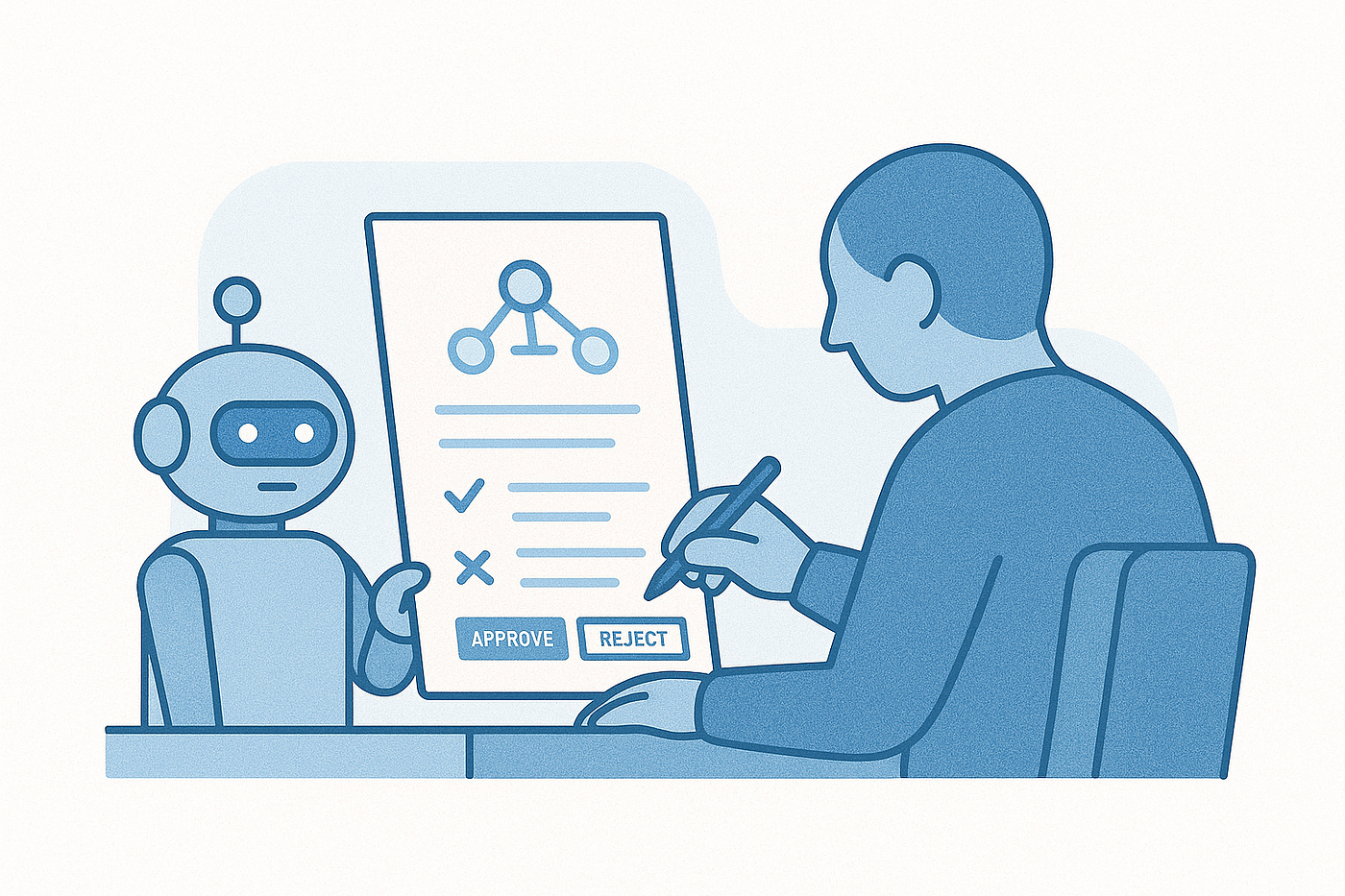
Level 2: AI generates plans or actions, pending human approval or redirection.
Role of AI: Drafts full solutions, strategies, or workflows.
Role of Human: Reviews, approves, modifies, redirects, or rejects proposals.
User Interface: Transparent plans with fields for approval, rejection, and correction input.
Minimum Quality Bar: > 70% initial proposal accuracy.
Level 3: Supervised (AI Works, Human Monitors and Intervenes)
AI agents or multi-agent systems act largely autonomously. However, the human supervisor plays an active role: they may interrupt execution at any point, make adjustments, and restart the process after corrections. This requires a user interface that not only shows logs and progress but also provides emergency stop, manual adjustment, and restart options.
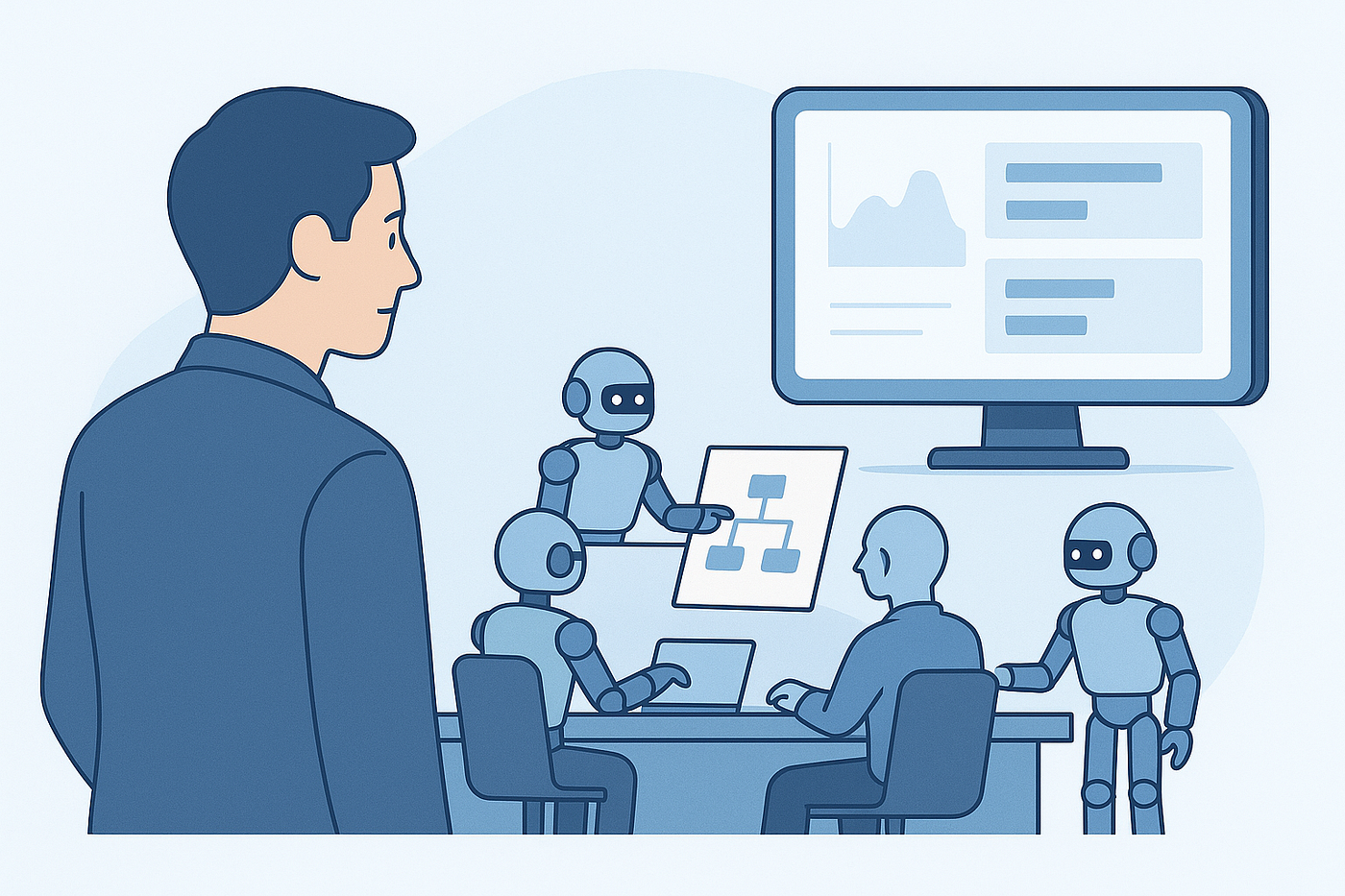
Level 3: AI executes actions with human able to intervene, adjust, and restart.
Role of AI: Operational autonomy within guidelines.
Role of Human: Monitoring, emergency stopping, adjusting, and restarting as needed.
User Interface: Monitoring dashboards with intervention controls and adjustment fields.
Minimum Quality Bar: ≥ 90% outcome success rate.
Level 4: Unsupervised (Full AI Autonomy with Human Backchannels)
Here, AI systems manage operations independently without active human supervision. However, humans are not entirely removed: they can study system performance through detailed logs post-execution. In addition, if the AI encounters a situation it cannot handle, it must be able to call or notify a human for assistance. A properly designed notification mechanism becomes critical at this level.
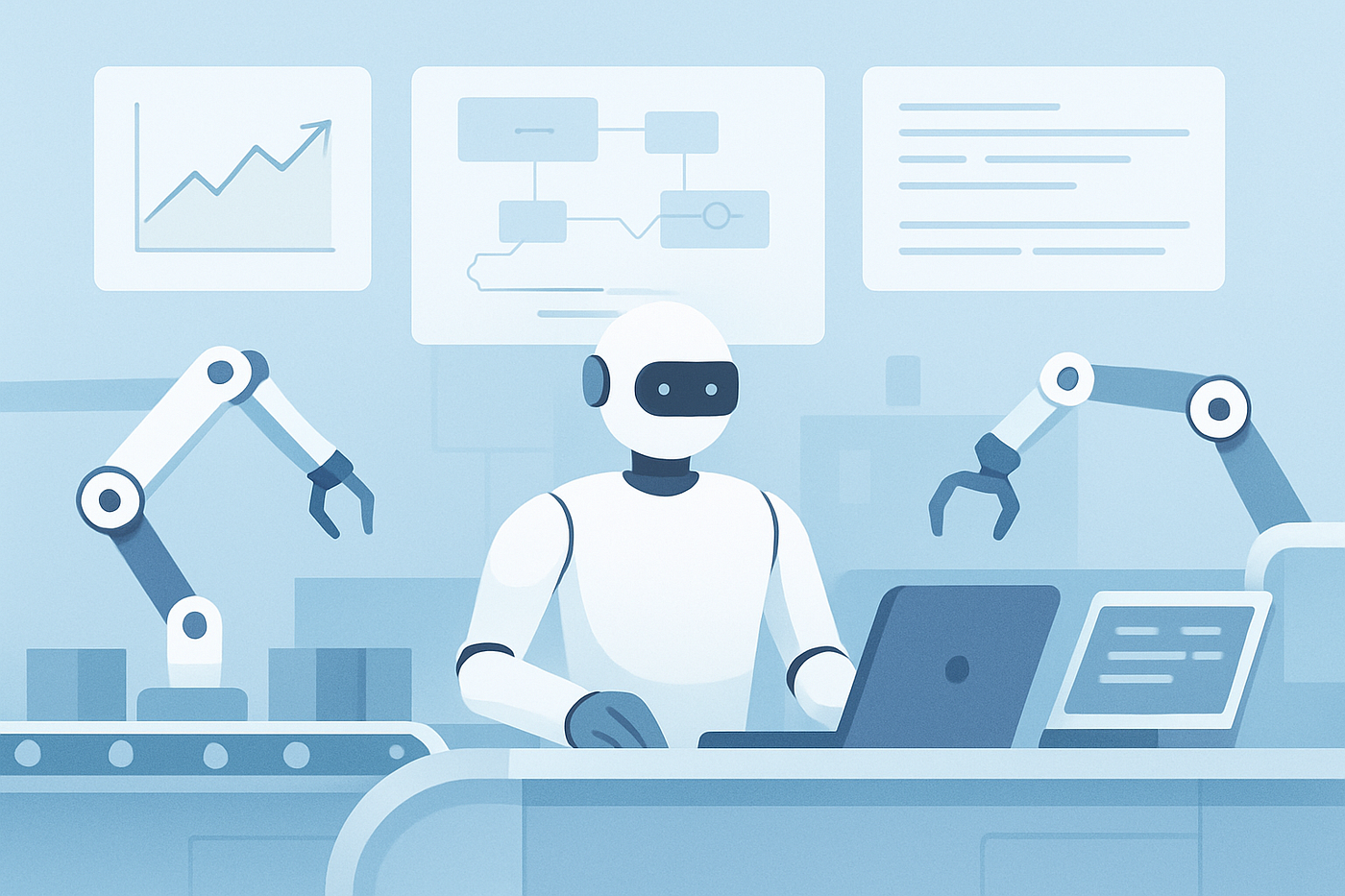
Level 4: Fully autonomous operation with optional human support when needed.
Role of AI: Total ownership of task execution, and notifying human if stuck.
Role of Human: Passive monitoring via logs and handling exception notifications.
User Interface: Minimal, focusing on log access and emergency notifications.
Minimum Quality Bar: ≈ 100% reliability within defined scope.
Why Blending Levels Matters
In real-world applications, multiple levels of automation should coexist within the same system.
For instance, a supervised AI operating at Level 3 might downgrade itself to Level 2 if it encounters a situation requiring approval or human judgment. This ensures resilience without stalling operations unnecessarily.
In training environments, blending levels is even more powerful. Imagine a system that normally operates at Level 4 (unsupervised) but can switch to Level 1 (assistance) or Level 0 (manual) during new scenario simulations or human training exercises. Allowing such dynamic transitions helps build trust, train staff effectively, and maintain system flexibility even as conditions change.
Designing AI that supports adaptive level-switching is not just a best practice — it is necessary for building robust, human-aligned automation systems.
Embrace the Spectrum
Understanding and applying the five levels of AI automation gives technology and business leaders a practical, flexible framework. It’s not about chasing \”full AI\” — it’s about strategically blending human expertise with machine capabilities at the right points.
The future isn’t binary. It’s layered. It’s adaptable. It’s already here.
If you want to keep learning how to build intelligent, flexible, and human-aligned AI systems, subscribe to our blog.
Let’s shape a future where technology truly empowers human potential