
A regional retailer had years of data spread across successive systems and no shared answer to which source to trust. EIC mapped the information estate before committing to a large retrieval platform and defined 11 governed knowledge collections instead of one corpus.
Established specialty retailer operating physical stores, owned eCommerce, an external marketplace, and a central fulfillment operation, with 126 regular employees and 341,000 annual store transactions and digital orders. The organization had operated for many years through multiple technology generations.
Part 3 of 5 at the same retailer: the knowledge the redesigned processes required, reused later by connectivity and production AI. Read part 4: connectivity →
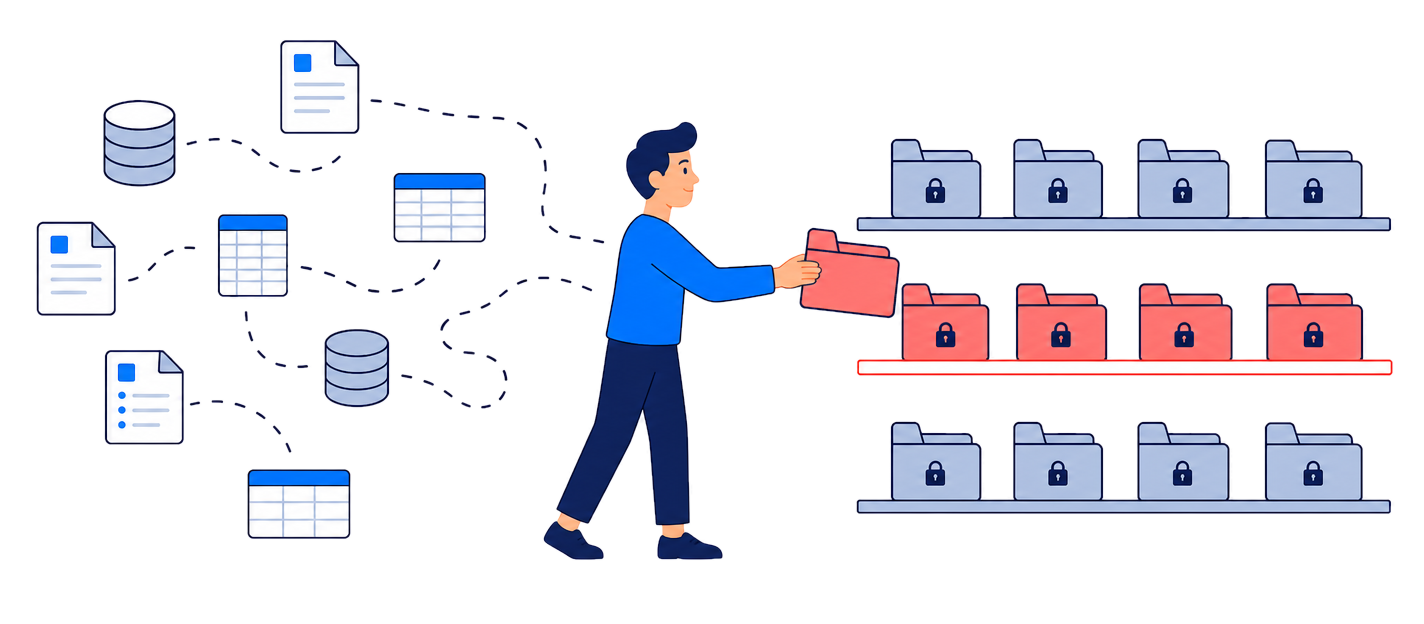
Years of operating history had left the retailer with useful information distributed across transaction systems, migrated records, SharePoint libraries, spreadsheets, supplier files, reporting outputs, operating procedures, and employee expertise.
Teams could not consistently distinguish authoritative operational records from convenient copies or analytical extracts
RAG prototypes treated too many source types as equivalent even though transactional records, policies, supplier documents, and historical analyses required different retrieval methods
Ownership of data freshness and knowledge accuracy was often implicit rather than documented
A single broad corpus could make sensitive financial, workforce, customer, or commercial information available to users who did not require it.
Frequently changing operational data could become obsolete quickly if copied into slow-refresh knowledge collections.
RAG vendors could charge for classification, normalization, connector development, and information discovery that should have been resolved before technology selection.
This produced the knowledge and source architecture required for RAG and AI without unnecessarily duplicating the company’s operational systems.
Instead of building one company-wide RAG corpus, EIC designed multiple governed knowledge collections aligned to departments, processes, and AI use cases.

EIC cataloged 27 priority information sources across NetSuite, Shopify, warehouse systems, customer-service and returns platforms, supplier EDI, SharePoint / Teams, Power BI, Excel, supplier files, policies, procedures, and historical materials.
Each source was mapped to a business domain, authoritative owner, downstream consumers, duplication risk, and known migration history.

Structured operational records used APIs, filters, identifiers, and exact queries. Policies, procedures, supplier documents, historical analyses, and narrative knowledge used semantic retrieval where appropriate.
High-volatility transactional information was not copied into static RAG collections simply because it was technically possible.

EIC designed 11 governed knowledge collections covering shared operating knowledge and department- or process-specific domains. There was no unrestricted enterprise corpus.
Access was assigned according to role, department, workflow, and sensitivity.
Inventory, orders, and fulfillment status required near-real-time or event-driven access; SOPs and policies changed less frequently and often required explicit approval. Refresh design followed the actual change pattern rather than one global synchronization schedule.
New assistants and automations begin with known sources, owners, permissions, connectors, and retrieval patterns instead of weeks of information discovery.
Current operational facts come directly from authoritative systems; governed knowledge is searched semantically where meaning matters.
Mixed sources use hybrid retrieval combining lexical, metadata, structured, and vector search.
User and workflow access boundaries are enforced, and answers trace back to responsible sources.
EIC defined evaluation datasets and expected-source cases for major knowledge domains.
Retrieval was tested for relevance, source correctness, freshness, access enforcement, citation traceability, and behavior after corpus updates.
Evaluation removed cross-department retrieval paths to restricted Finance, People Operations, or commercial information; approved test cases reached 100% expected collection-level access enforcement.
Monitoring covered retrieval degradation, stale content, failed synchronization, access-policy failures, latency, and cost.

The original vendor-led estimate of $420K fell to $268K, saving $152K, after EIC completed source classification, access design, knowledge normalization planning, and retrieval architecture before vendor implementation.
Evaluation against the test set increased correct authoritative-source retrieval from 71% in early prototypes to 92% after source filtering, metadata design, hybrid retrieval, and collection segmentation.
Knowledge and source onboarding for a new funded AI use case fell from 10–12 weeks to 4–6 weeks for sources already covered by the foundation, and knowledge preparation effort fell 55%.
Two later department initiatives reused approved source adapters and connectivity patterns, reducing their combined implementation cost by 30%, or $96K.
42% of priority information needs were determined to require structured or exact retrieval rather than semantic RAG, preventing unnecessary embedding and duplication of dynamic operational data.
76% of priority reusable business knowledge was assigned to a documented authoritative source and accountable business owner; a future data-platform program was estimated to need 40% less discovery and source analysis.
The company had understood years of information complexity well enough that AI, RAG, connectors, and a future data platform became cheaper, faster, and more predictable to build.
The service behind this storyAI Knowledge Base →
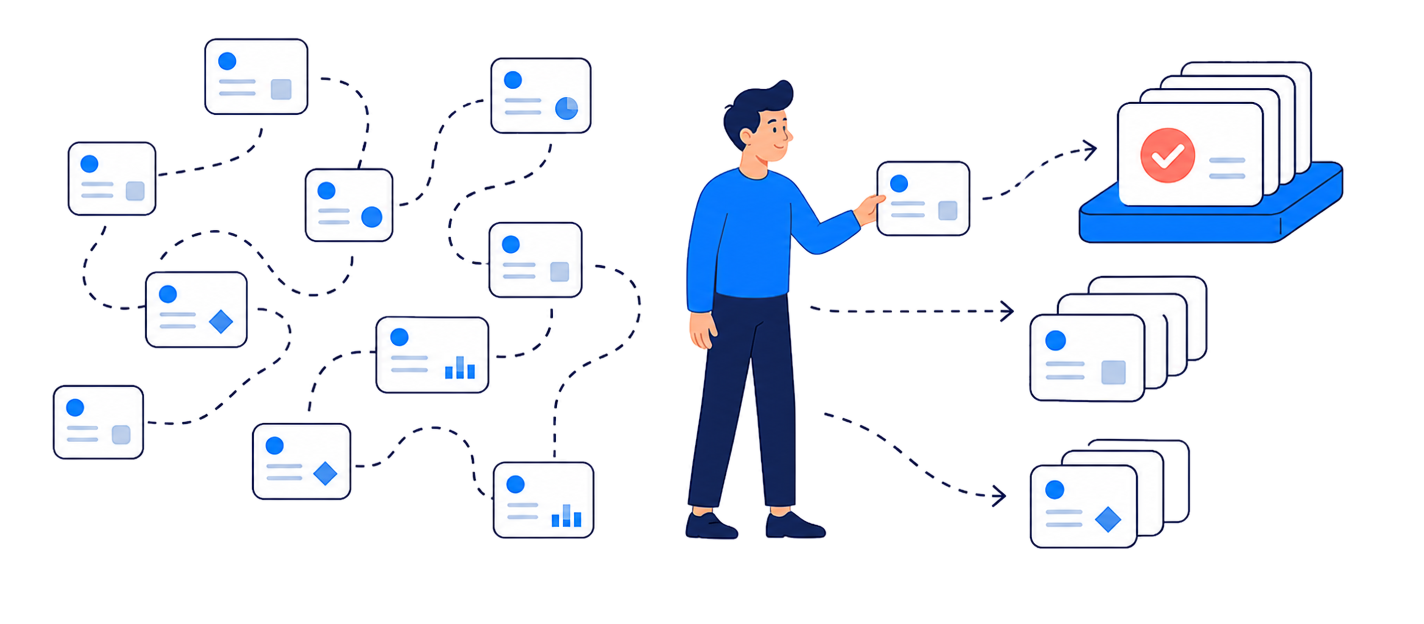
12 competing AI opportunities became one governed portfolio: 5 funded first, 4 deferred, 3 parked, and foundations built once for every later initiative.

Know-how that lived with experienced employees became explicit, validated target processes, so automation teams received approved process logic before design began.
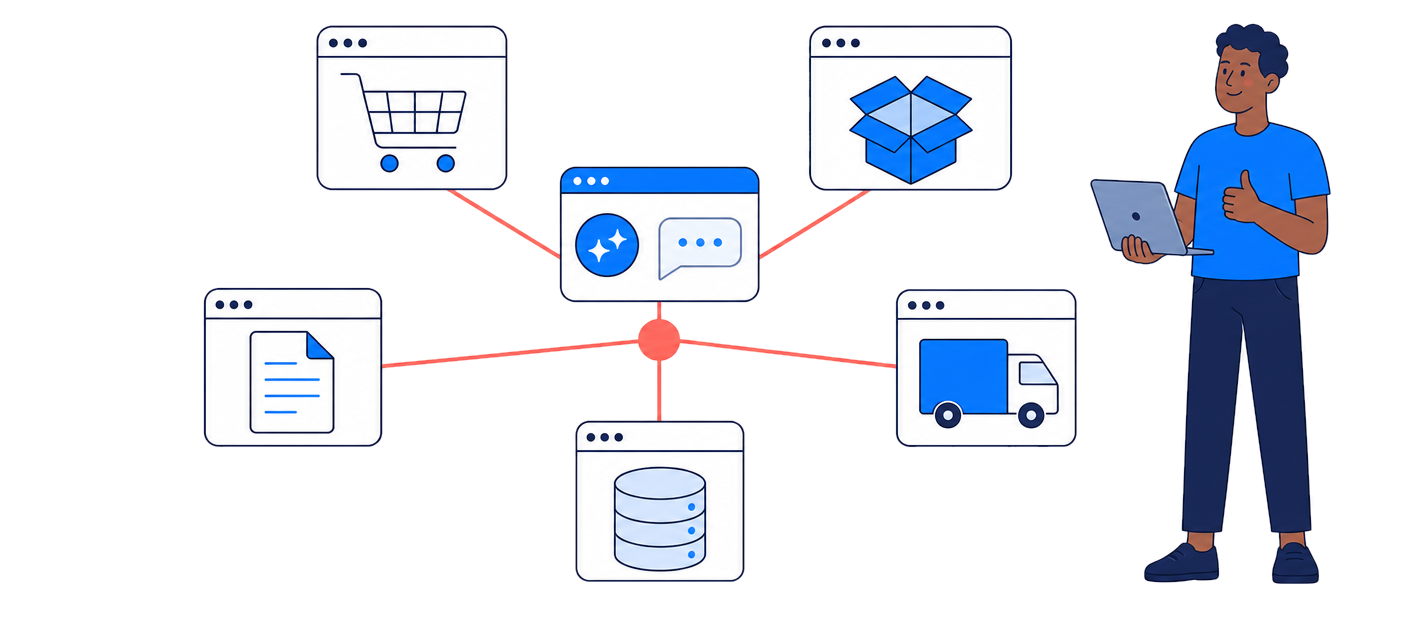
34 business-level interactions over 9 systems and knowledge services, so ChatGPT, Copilot and Llama-based applications reach the same approved tools.
Determine which information belongs in RAG, which should stay in your operational systems, who owns it, and how AI should retrieve it safely.