
A $34M omnichannel retailer had 12 competing AI opportunities and no common way to choose between them. EIC built one investment model on Domain Modeling, funded the strongest 5 first, and let their shared foundations speed up the rest.
Privately held U.S. specialty retailer selling branded footwear, casual apparel, accessories, care products, and seasonal merchandise through 6 stores, one owned eCommerce storefront and one external marketplace: $34.0M annual net sales and 126 regular employees. The retailer sat in the middle of its regional competitive set.
Part 1 of 5 at the same retailer: process reengineering, knowledge engineering, connectivity and production AI followed this strategy. Read part 2: the processes →
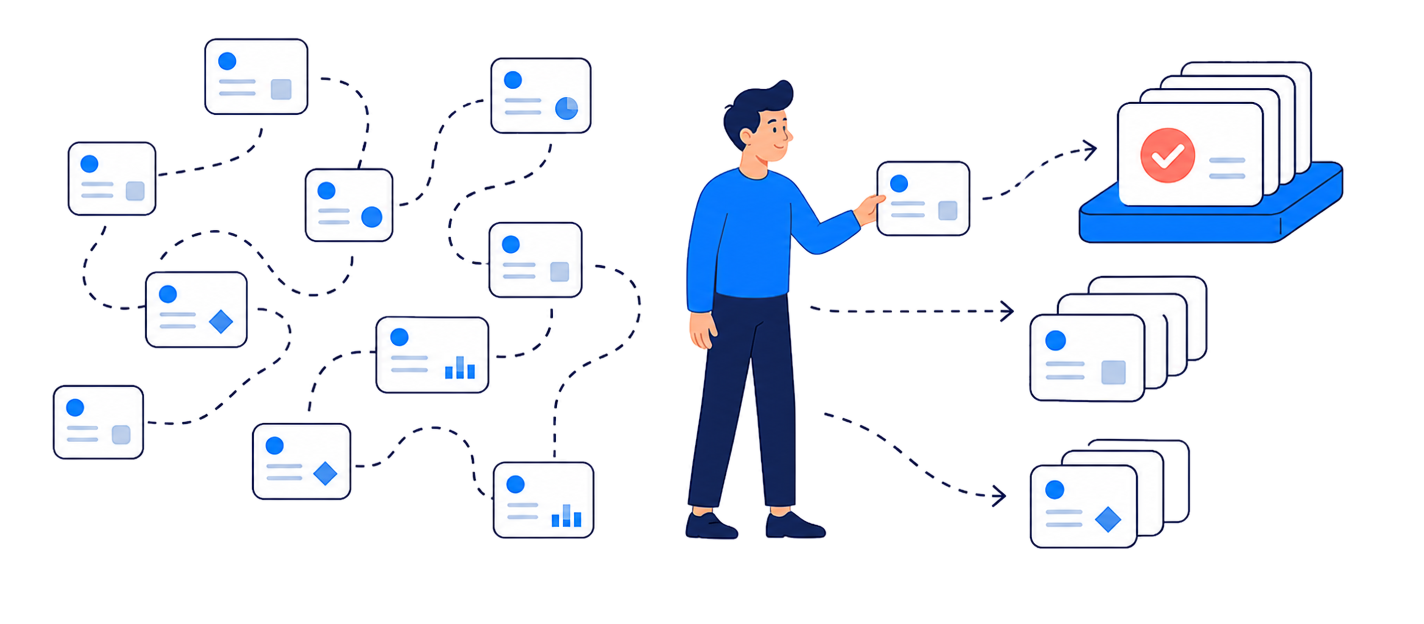
AI adoption had begun across multiple departments. New ideas were appearing faster than leadership could evaluate their economics, dependencies, integration requirements, or actual readiness for production.
Preliminary planning created an 18-month investment requirement of $1.42M across largely independent initiatives
Individual departments risked selecting different tools, integrations, and governance patterns
A two-person IT & Business Systems team could not sustainably operate a collection of unrelated AI platforms and custom pilots
The objective was not simply to reduce technology spending. It was to determine which sequence of investments could improve operating capacity and allow the retailer to introduce competitive capabilities faster than a decentralized pilot model would permit.
Several projects could enter lengthy proofs of concept before underlying process, knowledge, or integration problems were addressed.
NetSuite, Shopify, the warehouse-management environment, robotics, customer-service systems, and other reliable platforms remained in place. The strategy also rejected the assumption that the retailer needed a large AI platform or standalone internal AI organization before individual business cases justified them.
Capabilities, functions, processes, knowledge, systems, automation, and manual gaps were connected so each AI opportunity could be evaluated in its actual business context.

EIC created an organization-wide AI investment strategy grounded in Domain Modeling rather than technology selection.
The engagement focused first on organization-level strategy rather than immediately implementing every proposed AI use case.

Initiatives were also evaluated by whether they could improve capabilities visible to customers or materially increase the retailer’s ability to compete in assortment responsiveness, availability, fulfillment, service, and digital experience.

The first investment wave concentrated on merchandise decisions, supplier information preparation, customer-service responsiveness, fulfillment work, and other high-friction operations.
Shared knowledge, governance, integration, and evaluation patterns were built through those initiatives, then reused by later implementations.
Successful foundations from the first implementations made later capabilities less expensive and faster to release, allowing the retailer to increase the pace of practical innovation without trying to match larger competitors dollar for dollar in technology spending.
Capabilities, functions and the organization structure show which areas can materially influence growth, capacity, and customer experience.
Operating flows are connected to the functions, decisions, systems, and handoffs responsible for execution, with manual gaps identified.
Reliable deterministic automation is separated from AI opportunities, and the AI-Native System Blueprint defines how AI, people and systems interact.
Each opportunity is compared on cost, capacity value, impact, dependencies, reuse, readiness and strategic importance before a funding decision.

The actual 18-month investment was $850K against the $1.42M decentralized plan, reducing initial expenditure by 40%.
The decentralized approach projected 30 months before multiple business areas would reach regular production use. The sequenced roadmap got there in 18, with 6 production AI capabilities and 9 business features live; the first capability was delivered in 5 months.
Two deferred initiatives reused the knowledge, integration, governance, and monitoring capabilities developed in the first wave, reducing their combined implementation cost by 24%, or $74K.
The portfolio released 4,900 hours of annual operating capacity, and the existing central organization supported 12% more digital orders without proportional headcount expansion.
The $515K includes $330K in hard or near-hard avoidance and $185K in productive capacity value; at that run rate the $850K investment produces 82% simple ROI over three years, before discounting or financing effects.
Within the peer set of eight comparable regional omnichannel specialty retailers, the company moved from 6th position to 3rd, immediately behind the two strongest regional competitors.
AI investment moved from department-led experimentation to a governed competitive portfolio. Over time, this allowed a mid-market retailer with limited internal technology capacity to compete much closer to the leading organizations in its niche.
The service behind this storyAI Organization Strategy →

Know-how that lived with experienced employees became explicit, validated target processes, so automation teams received approved process logic before design began.
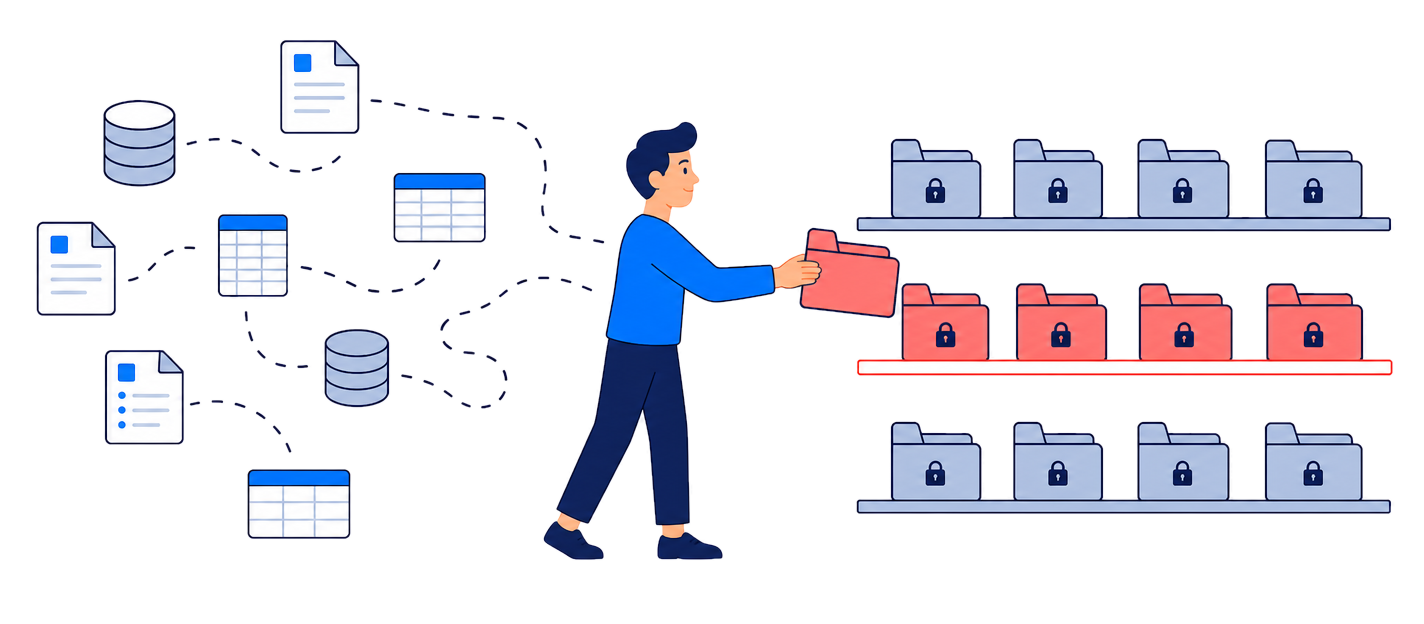
27 sources classified by authority, owner and retrieval method, and 11 governed collections instead of one corpus, before committing to a large retrieval platform.
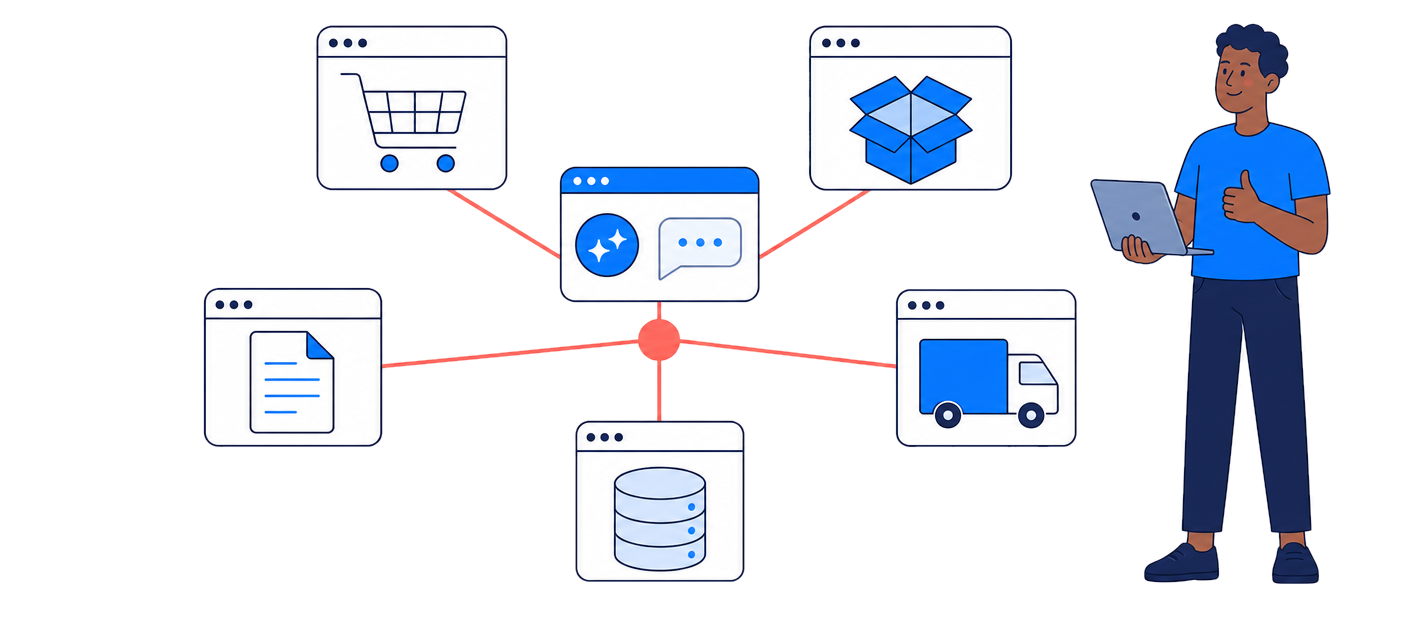
34 business-level interactions over 9 systems and knowledge services, so ChatGPT, Copilot and Llama-based applications reach the same approved tools.
Determine which opportunities can create real business value, which investments should wait, and how the right sequence can turn limited AI spending into competitive advantage.