
A regional retailer’s processes worked because experienced people knew what to do when the documents stopped. EIC turned that know-how into explicit, validated target processes across 5 operating domains, so automation teams received approved logic before design began.
Privately held specialty retailer operating six physical stores, owned eCommerce, an external marketplace, and a central fulfillment operation, with 126 regular employees. The retailer had already completed organization-level Domain Modeling and AI investment prioritization and had begun establishing a governed knowledge foundation.
Part 2 of 5 at the same retailer, after the AI investment strategy. The knowledge foundation, connectivity and production AI were built on these processes. Read part 3: the knowledge foundation →

The retailer’s operations were not undocumented in the literal sense. The problem was that no single source represented the complete process as it was truly performed: it existed only when documents, systems, working files, historical practice, and employee judgment were combined.
Experienced employees routinely applied rules that had never been formally described
Exception paths were often understood only by the people who encountered them frequently
Human judgment, approval authority, and escalation conditions were insufficiently explicit for safe automation
Missing exceptions and decision rules could surface only after development had already begun, so process discovery continued inside implementation instead of being completed before solution design.
Work described initially as requiring an autonomous agent could actually consist of deterministic steps, bounded AI tasks, and a human approval.
Because the broader domain context was already known, EIC could identify where the process was already sufficiently understood and where material uncertainty remained before requesting stakeholder time.
The Target Process was engineered for AI from the beginning, not documented first and automated later as a separate exercise.

Roles, accountability, approval authority, key decisions, escalation paths, and control points were formalized so automation would not inherit ambiguous ownership.

Each task was evaluated according to the form of execution that best matched its business purpose, risk, knowledge needs, and decision authority: from human decision or approval to deterministic automation, a reusable AI skill, an assistant or an agent.

Process definitions, knowledge analyses, task models, artifact catalogs, decision frameworks, Work Instructions, and AI-enabled templates could support multiple downstream implementations.
EIC performed the analysis, synthesis, process modeling, artifact analysis, and documentation outside stakeholder sessions, extracting only the operational knowledge that could not be reliably reconstructed from existing evidence.
Procedures, spreadsheets, system behavior, operational files and prior domain information are analyzed before anyone is interviewed.
Role-specific interviews with 2 to 3 stakeholders per subdomain cover decisions, exceptions, handoffs, tacit rules and actual operating variations.
Tasks, knowledge, artifacts, decisions, controls, roles and human-oversight points are made explicit, with an execution form for each task.
Work Instructions, AI skills, assistants, agents, deterministic automations and human decision points are identified before development begins.

Average discovery and solution-design effort for subsequent major automation initiatives fell from 14–16 weeks to 8–9 weeks.
Requirements and workflow rework during the first automation implementations fell by 34% compared with the retailer’s earlier tool-led pilot approach.
Of 17 initially identified agent-style opportunities, only 7 ultimately required a multi-step agentic execution pattern; the rest became less expensive combinations of deterministic automation, AI skills, retrieval, workflow orchestration, and human approval.
Simplifying those designs reduced projected first-wave software, integration, and operating expenditure by $190K compared with implementing every candidate as a standalone agent or custom AI workflow.
47 material undocumented rules, exceptions, decisions, handoffs, or escalation conditions were identified and incorporated into authoritative process definitions across 14 process subdomains.
84% of 126 material process tasks received a target execution category in the first pass, 38 recurring artifacts were mapped, and 23 decision or control points were reserved for people.
The company stopped asking AI and implementation teams to reverse-engineer the business process during development. It created a process model that improved human execution immediately, standardized AI-assisted work next, and provided the blueprint for progressively deeper automation.
The service behind this storyAI Process Reengineering →
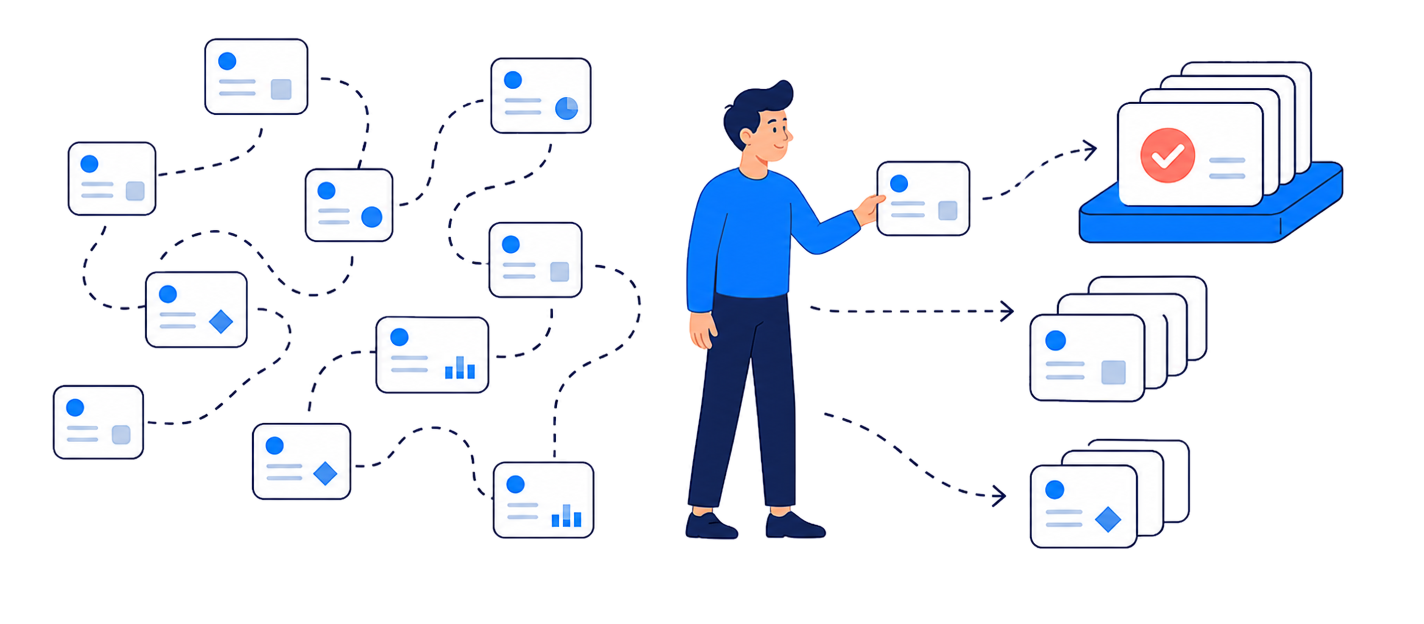
12 competing AI opportunities became one governed portfolio: 5 funded first, 4 deferred, 3 parked, and foundations built once for every later initiative.
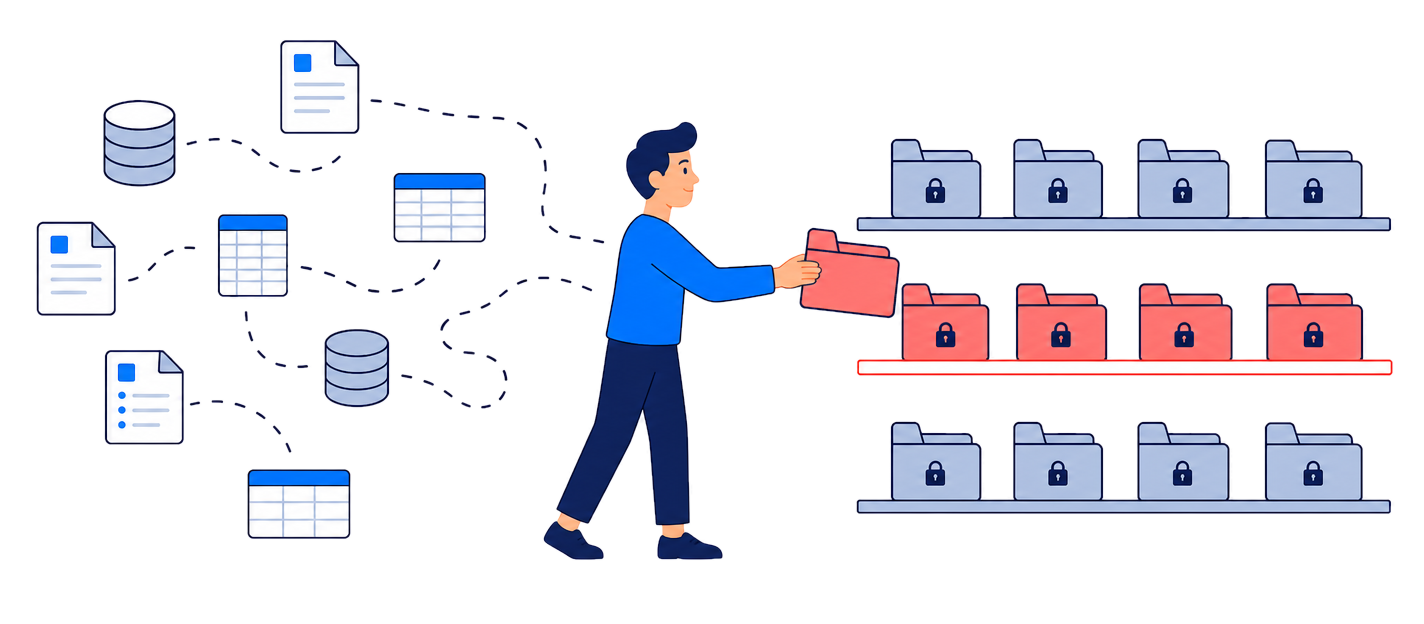
27 sources classified by authority, owner and retrieval method, and 11 governed collections instead of one corpus, before committing to a large retrieval platform.
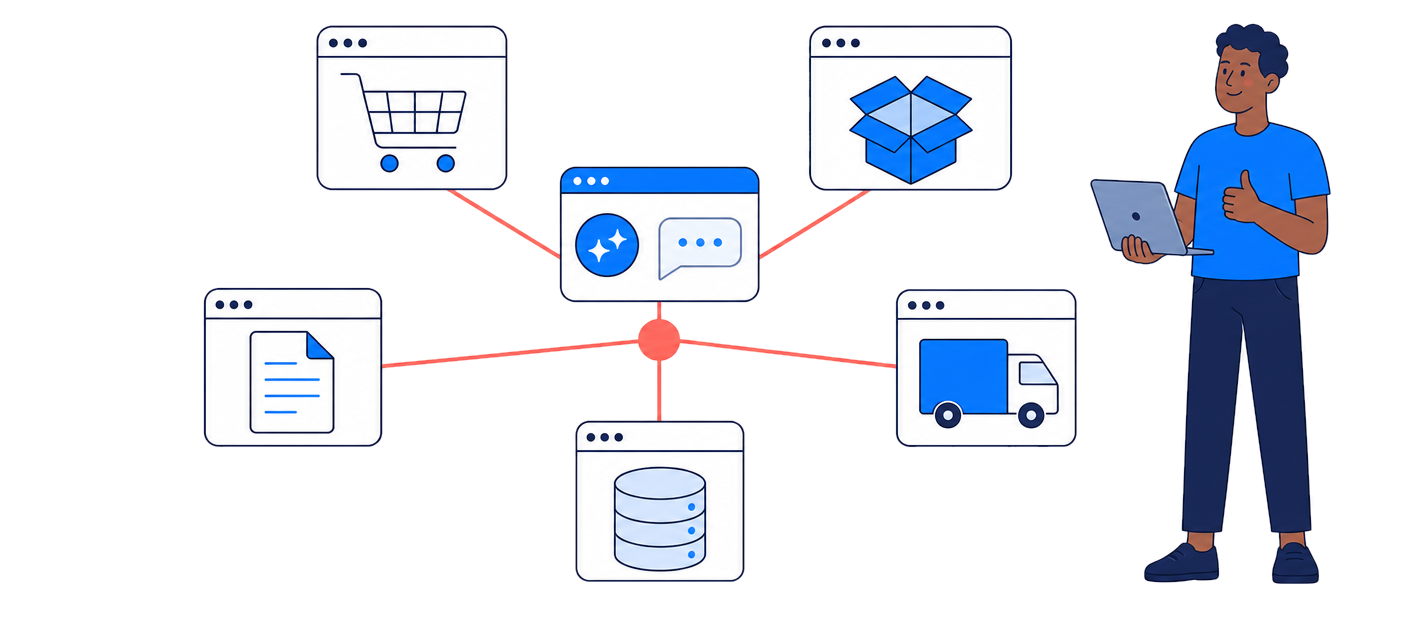
34 business-level interactions over 9 systems and knowledge services, so ChatGPT, Copilot and Llama-based applications reach the same approved tools.
Make sure the process exists somewhere other than in the people who know how to perform it.