Ever caught yourself spending hours on content you barely remember later? You’re not alone.
As a marketing manager, I’m always chasing the latest insights — industry webinars, expert videos, articles, you name it. Keeping up is tough. You bookmark a hundred things, promise yourself you’ll watch them later, and weeks go by without ever revisiting them. Sounds familiar, right?
Here’s the kicker: manually trying to absorb and share all that content with your team is a losing battle. You end up with scattered bits of knowledge, most of which never translates into actionable strategies. It’s inefficient, it’s exhausting, and honestly — it drives me nuts.
But at some point, I realized we couldn’t keep wasting hours trying to keep up. There had to be a faster, more structured way to work with this kind of content — something that wouldn’t drain time every single week.
That’s when I decided to change the approach.
The Cost of Doing Things the Old Way

Think about your usual routine:
- Fragmented notes across countless platforms and tabs — valuable knowledge slipping through your fingers when you need it most.
- Endless hours spent sifting through content. How many times have you thought, “I could’ve used that time better”?
- Information overload that feels like drinking from a firehose — too much to digest, let alone apply effectively.
This isn’t just frustrating; it slows down decision-making, leads to duplicated work, and makes it harder to move fast when it actually matters. I got tired of working harder instead of smarter.
How AI Changed Everything (No Exaggeration)
The breakthrough came when I decided to try something new: using AI to process content I normally wouldn’t have time for — long webinars, interviews, trend breakdowns.
I started with transcription and summarization. That alone helped me extract the core insights without spending hours watching or reading.
Then I took it further: I began turning these summaries into a centralized, searchable knowledge base. Something I could actually reference — and build on.
Once that was in place, something changed.
- Content was no longer scattered across tabs or bookmarks.
- Key insights were easy to find and reuse.
- And sharing it with the team became instant — no rephrasing, no chasing links.
It wasn’t just more efficient. It finally felt like the knowledge we were collecting was actually usable.
My Turning Point: From Summaries to an AI Assistant
Once the knowledge base of external insights was ready — structured, searchable, and full of valuable material — I realized it wasn’t enough.
I didn’t just want to collect what others had figured out. I wanted an assistant that could think with our context in mind — applying these insights to our positioning, our campaigns, our way of working.
That’s when I decided to connect this base with our own internal knowledge: past experiments, briefs, messaging docs, product decisions — everything that reflected how we actually operate.
The result wasn’t just a smarter archive. It became a working assistant — one that gives tailored, relevant answers based on both current market trends and our real experience.
Now, when someone from the team needs to plan a launch, refine messaging, or understand what we’ve already tested, they don’t dig through folders or ask around. They just ask the assistant — and get a response shaped by our voice, logic, and priorities.
It’s faster. It’s easier to explain to new team members. And it ensures that everyone operates with the same strategic foundation — updated, focused, and truly ours.
What the Assistant Became for Us
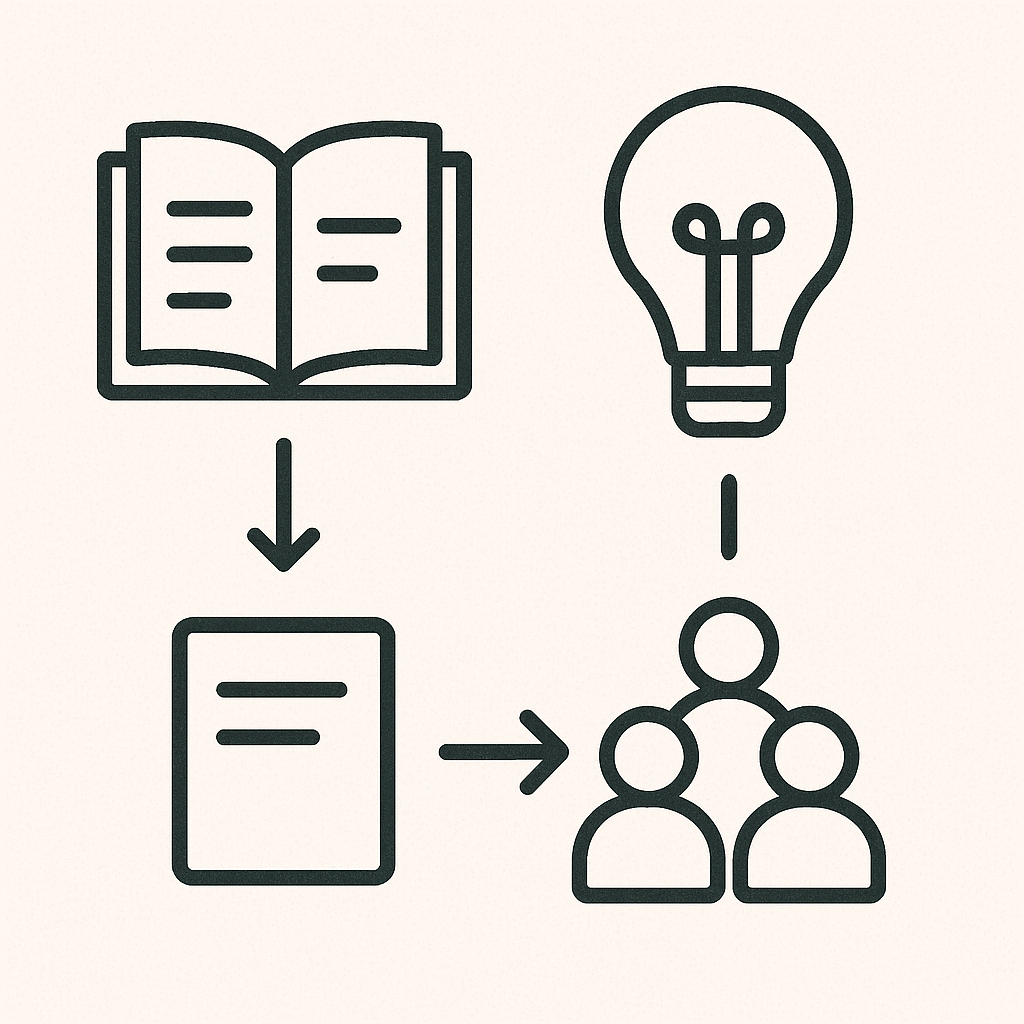
Once the system started working, it stopped feeling like just a tool — and started acting more like a real advisor.
It helped us move faster not by giving “the answer,” but by narrowing the gap between strategy and execution.
Every time someone needs to clarify direction, explore an idea, or connect past work to a new task — the assistant is already there, offering input based on how we actually operate.
It’s tuned to our tone, our decisions, our thinking patterns. And it updates as we evolve — without needing to be retrained from scratch.
New team members onboard faster. Cross-team conversations become clearer. And day-to-day decisions benefit from everything we’ve already learned — without us having to remember it all.
That’s what made it valuable. Not just access to information — but access to relevant, contextual judgment on demand.
If you’re wondering whether this approach could work for your team — it absolutely can. It doesn’t require a big setup, just the right focus: valuable inputs, structured knowledge, and a way to make it accessible when it matters.
Make Knowledge Your Real Competitive Advantage
Structured, accessible knowledge doesn’t just save time — it compounds.
It makes team collaboration easier.
It makes onboarding faster.
It makes your strategy repeatable.
Most importantly, it makes sure that the hard-earned lessons and insights your team already has are always in play — not buried in someone’s personal archive.
And when that happens, your entire company starts learning faster than the competition.
Want more practical insights on AI?
Subscribe to our blog, and I’ll share exactly how we’re turning AI into our strongest strategic asset.