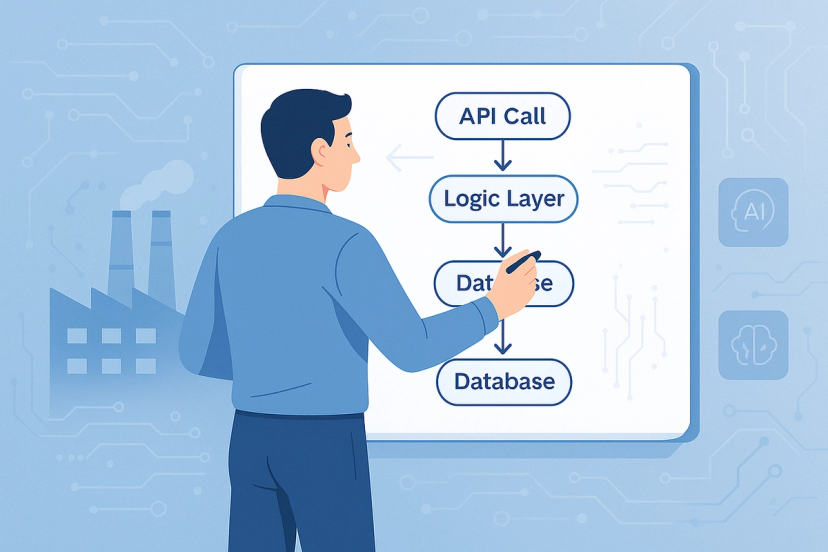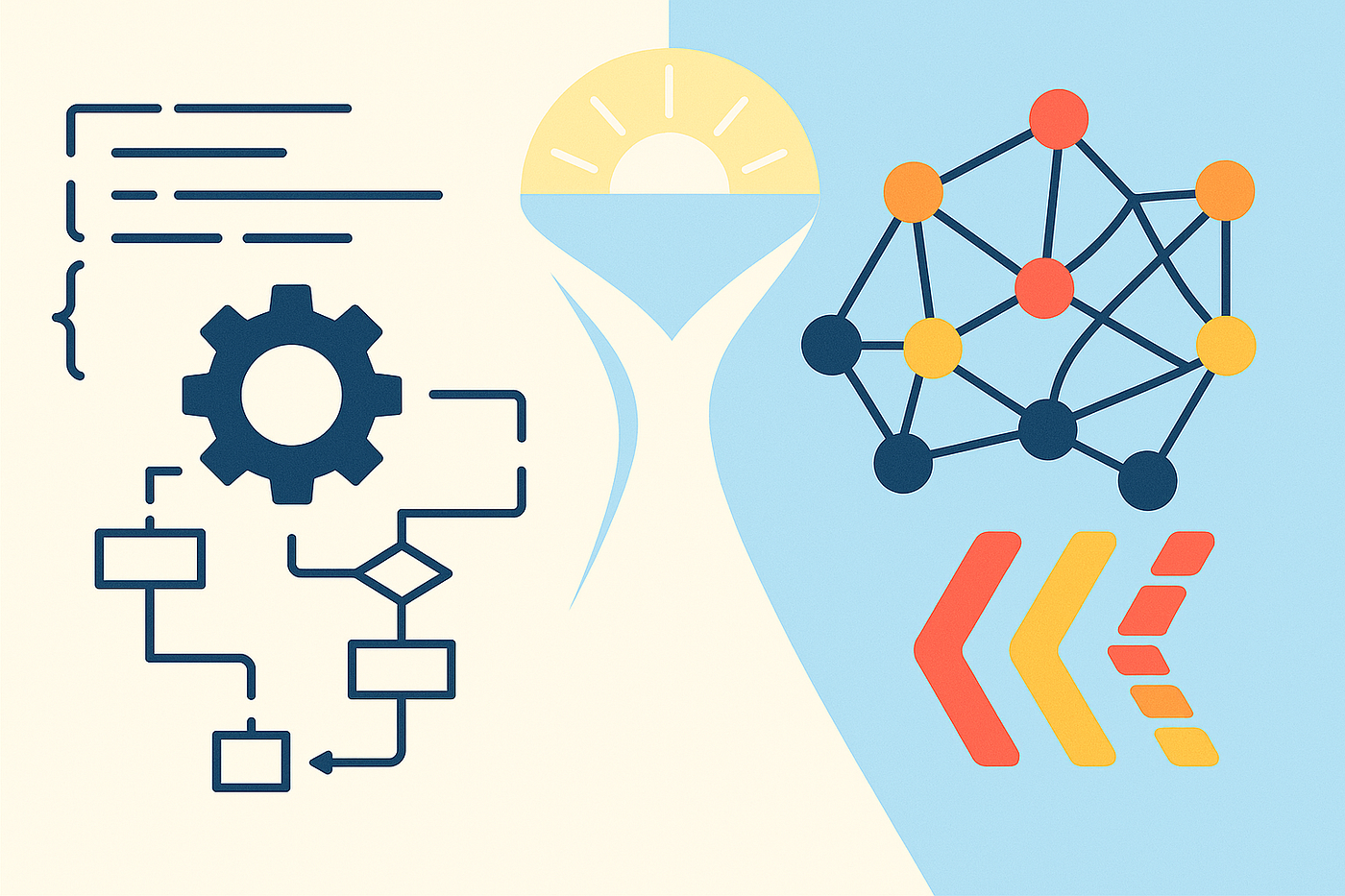
Working with engineering teams today, I often see a subtle hesitation whenever artificial intelligence enters the discussion. Traditional coding? Confident nods. AI programming? Eyes shift, shoulders tense. Why do we treat it as if it’s something fundamentally different — when in fact, it’s not?
The truth is, AI programming isn’t a special case. It’s a different point on the programming continuum. It’s a statistical approach to solving problems, just like traditional programming is an algorithmic one. The job is the same: process information and generate results. The technique is what varies.
What Programming Really Means

At its core, programming is about information processing. You define a model — be it deterministic or probabilistic — that transforms input into meaningful output. Whether you handcraft rules in C++ or train a neural network with Python, you’re engineering a system to perform a task.
Understanding this common ground is essential to moving past artificial divides.
Traditional Programming: Clarity and Control
Traditional programming thrives on analytical thinking. Developers analyze a problem, design logic, and write algorithms. The outcomes are deterministic. If the same input goes in, the same output comes out. This yields compact, efficient code and high runtime performance. But complexity can balloon quickly. Ambiguity and unstructured data often pose challenges.
AI Programming: Learning and Adaptation
AI programming leans on synthetic thinking. Rather than defining the logic explicitly, developers define the problem space, collect representative examples, and train a model. The system learns the rules through data. The results are probabilistic — inputs may produce slightly different outputs depending on the learned distribution.
AI models are typically larger and slower than traditional programs. However, they adapt more easily to fuzzy or loosely defined problems. They also generalize better, handle unstructured data, and learn from new inputs without manual reprogramming.
Two Styles, One Spectrum
AI programming and traditional coding are not opposing philosophies — they’re different strategies within a shared domain. One isn’t “hard” and the other “soft.” They both solve information-processing problems using computational methods. The key differences lie in methodology and output characteristics, not in purpose or rigor.
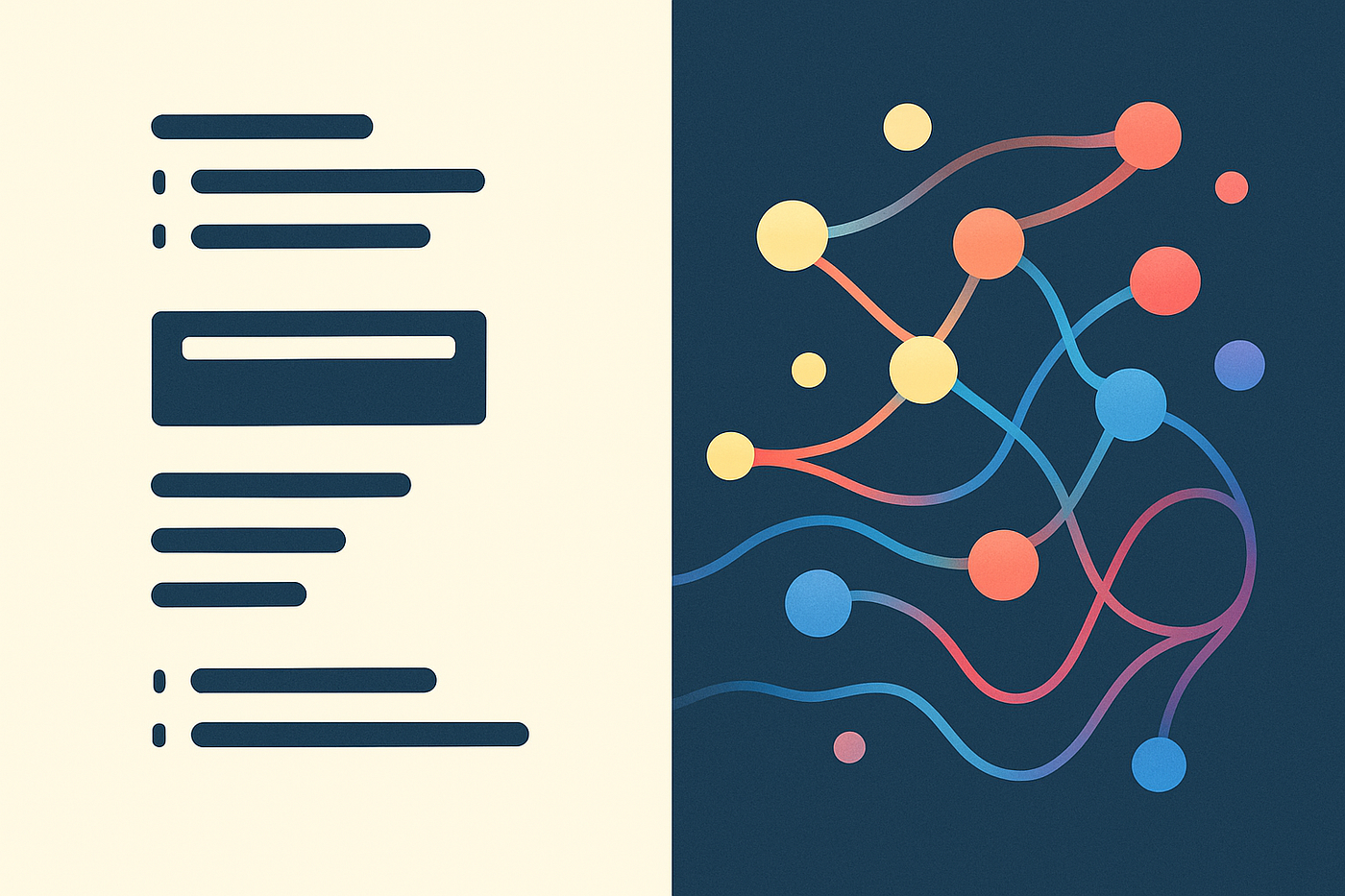
Here’s how the two styles compare:

Modern systems don’t exclusively use one approach. Complex software increasingly blends both paradigms. Think of traditional logic orchestrating API calls and state transitions, while machine learning models handle image recognition, anomaly detection, or natural language understanding.
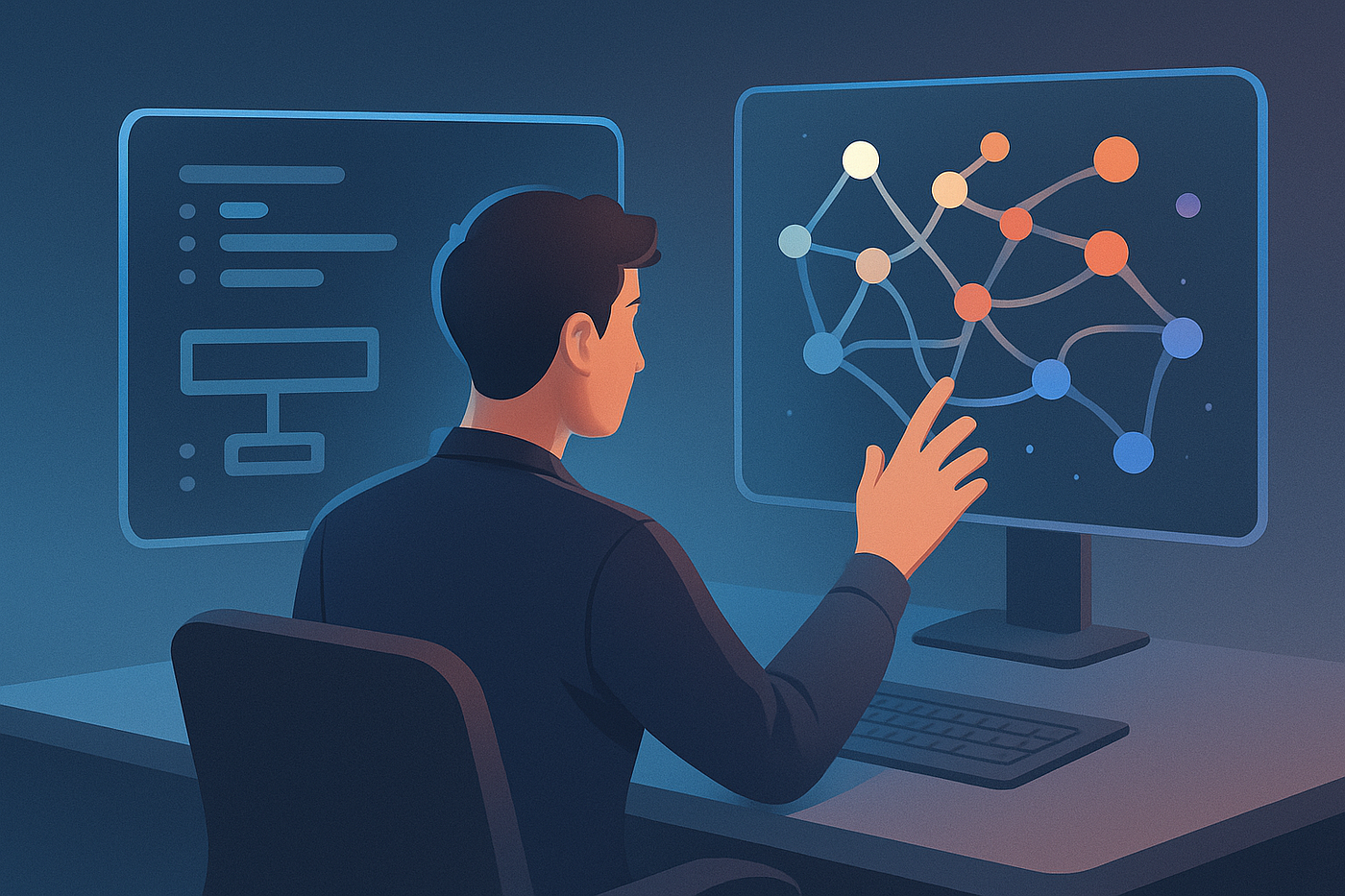
A system may contain traditional components for structure and flow, and AI modules for flexibility and nuance. This hybrid architecture is already mainstream.
A Shift in Mindset and Education
As programming practices evolve, so too must our mindset. AI development should be a first-class citizen in the software lifecycle — not a side specialty. Tooling, testing, deployment, and integration processes should work across both traditional and AI-driven components.
Education must also catch up. We should teach future developers that building a machine learning model is no more exotic than writing a recursive function. Both are tools. Both solve problems. The difference is in how, not in how hard.
It’s Time to Normalize AI Programming
The real divide isn’t technical — it’s psychological. Many developers still see AI as something separate, advanced, or reserved for experts. That perception creates friction. But AI is just programming with a different approach to modeling behavior.
Once we drop the notion that AI is an outlier, we unlock new levels of creativity and capability. We stop asking, “Should we use AI here?” and start asking, “What’s the best way to solve this problem?”
AI isn’t a mystery. It’s just another method in the programmer’s toolkit. And when we treat it that way, we build better systems — and better engineers.
In future posts, we’ll continue exploring this continuum — particularly how to structure hybrid systems and think clearly about where AI models and traditional code best complement each other.